Telecare Futures
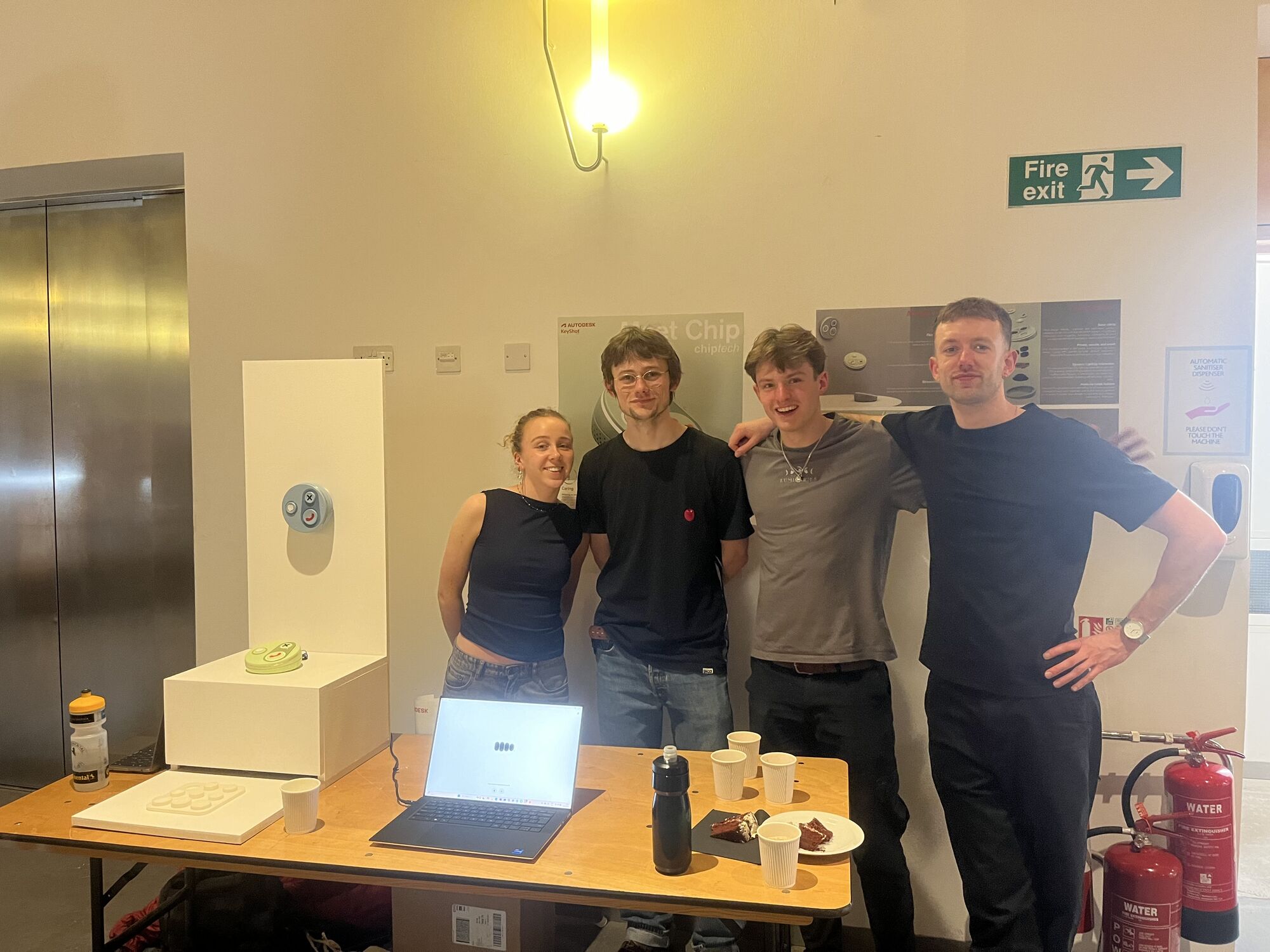
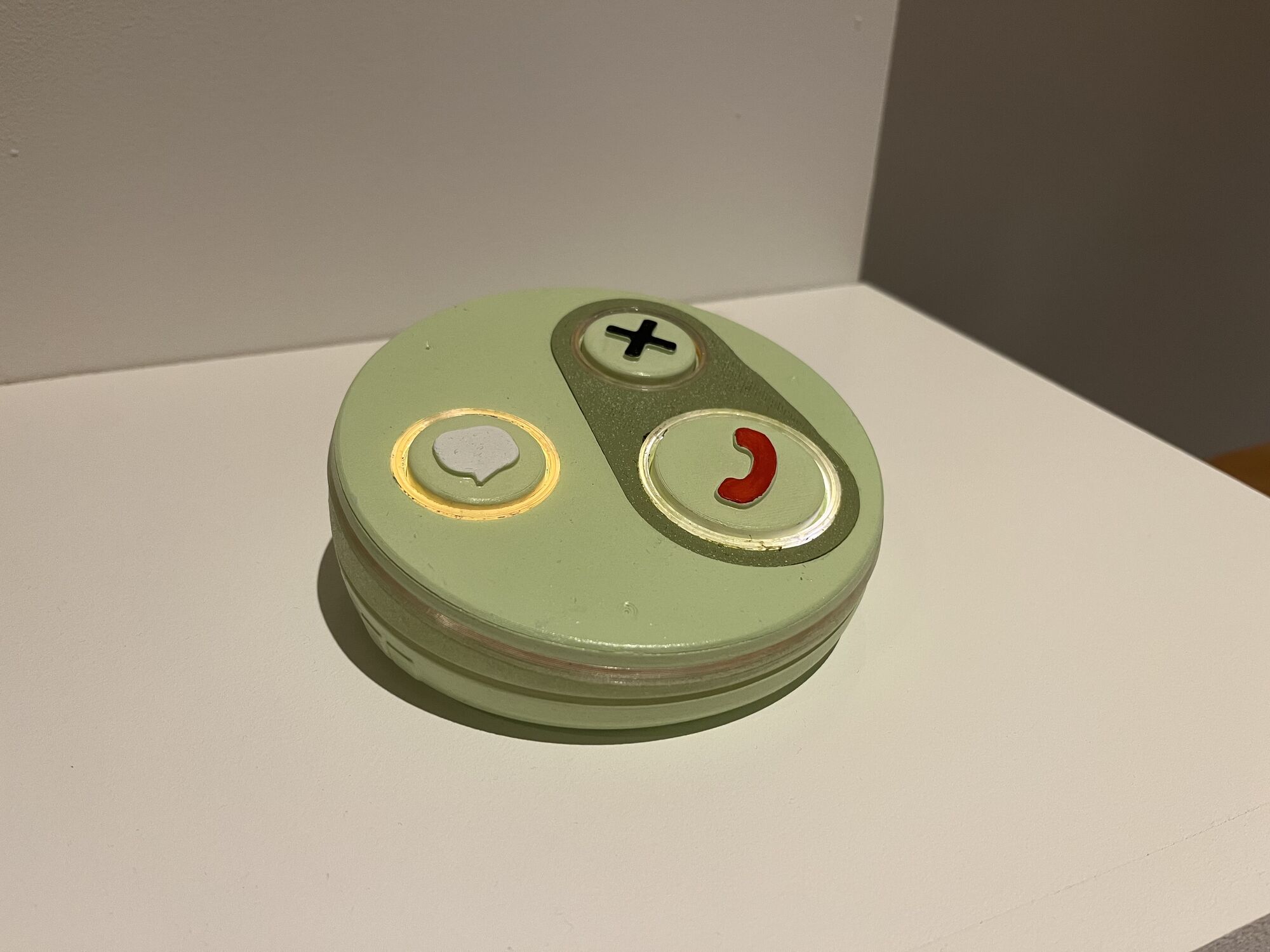
Chip, a telecare device for assisted living that cares for its user rather than just calling for help. Designed with Chiptech and selected as the winning design from across the year group.
The brief
Telecare devices let elderly and vulnerable people live independently and call for help when they need it. Chiptech asked our year group to redesign its system, which was clearly outdated: purely reactive, a gateway to emergency help rather than to care.
Our team set out a different goal. Telecare should help elderly people live happily, independently and healthily, and should genuinely care for its user.
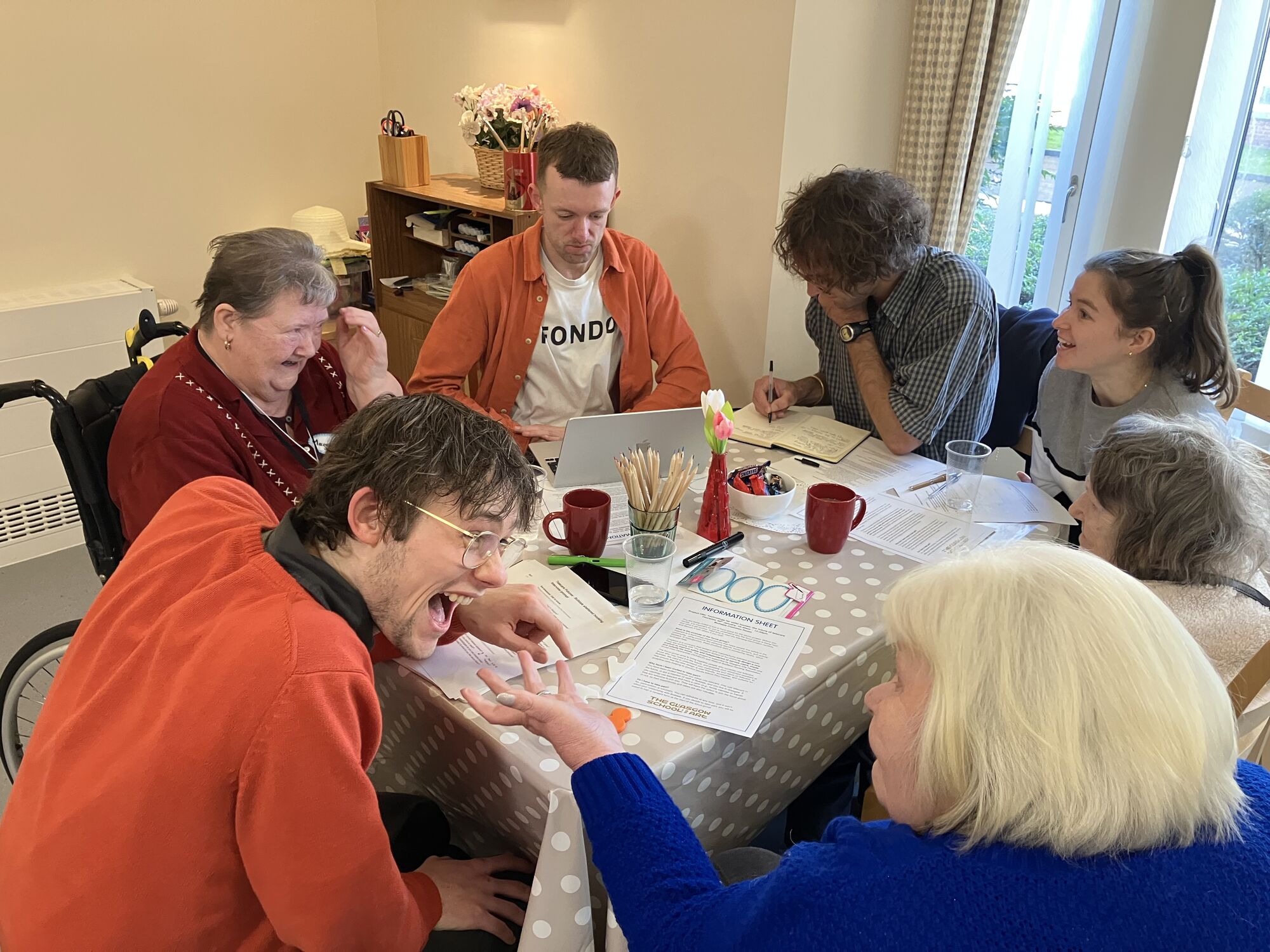
Research with residents
We made two visits to assisted living homes: the first to understand residents and their routines, and the second to test our designs with them. Residents told us things like:
- "Background noise from TV or radio can be an issue in a critical call."
- "I wouldn't be able to see the device on my table from my wheelchair."
- "With my sight problems, it's difficult to see text."
Looking at the wider system, we found a care sector stretched thin, with little help for practical care, and loneliness as one of the biggest problems elderly people face.
Five design constraints
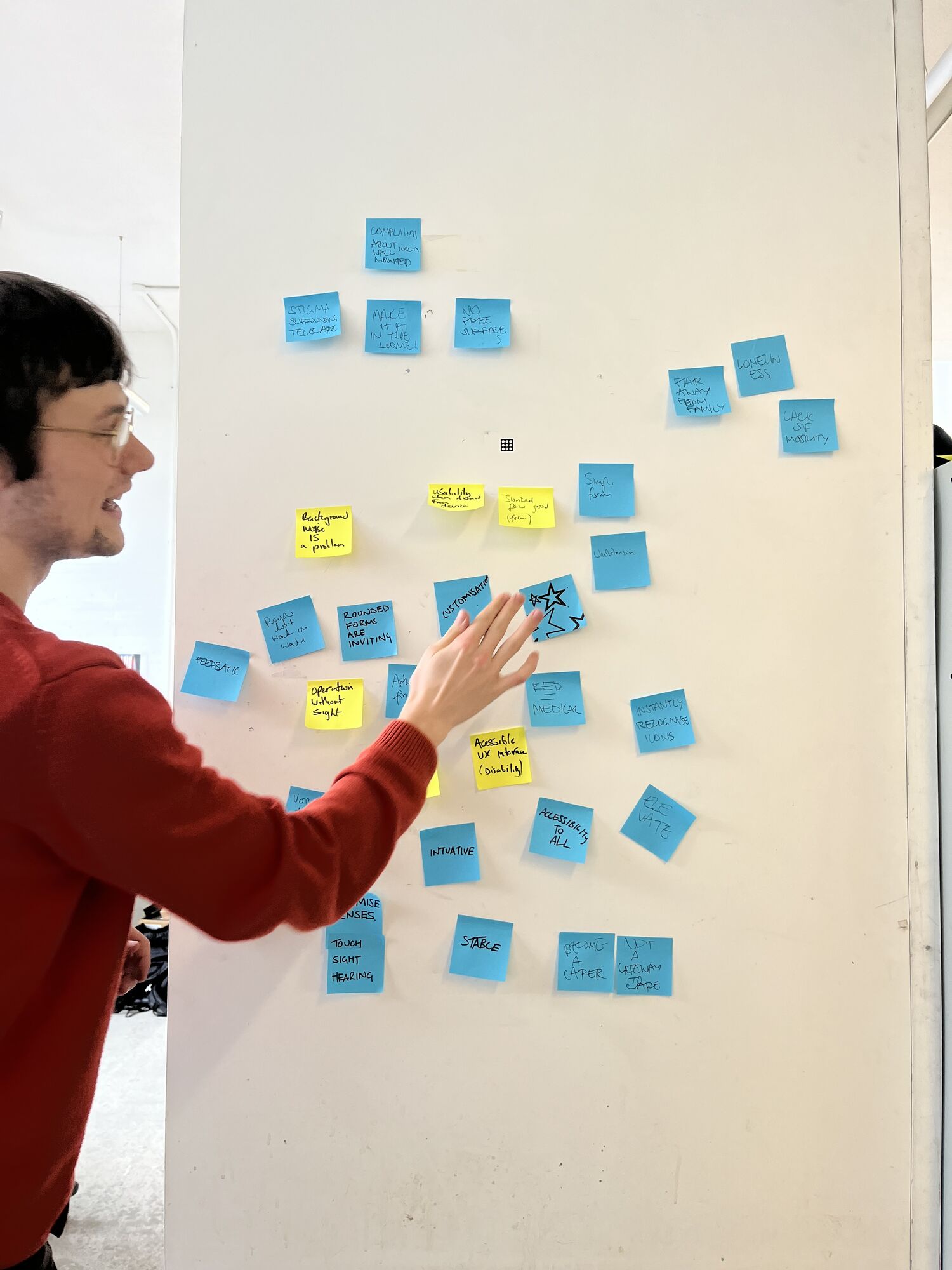
We distilled the research into five constraints that every decision had to meet:
- Accessible to all
- Humanise the interaction
- Need as little learning as possible
- Actively support social and personal needs
- Every design choice has to be backed up
An entity, not a device
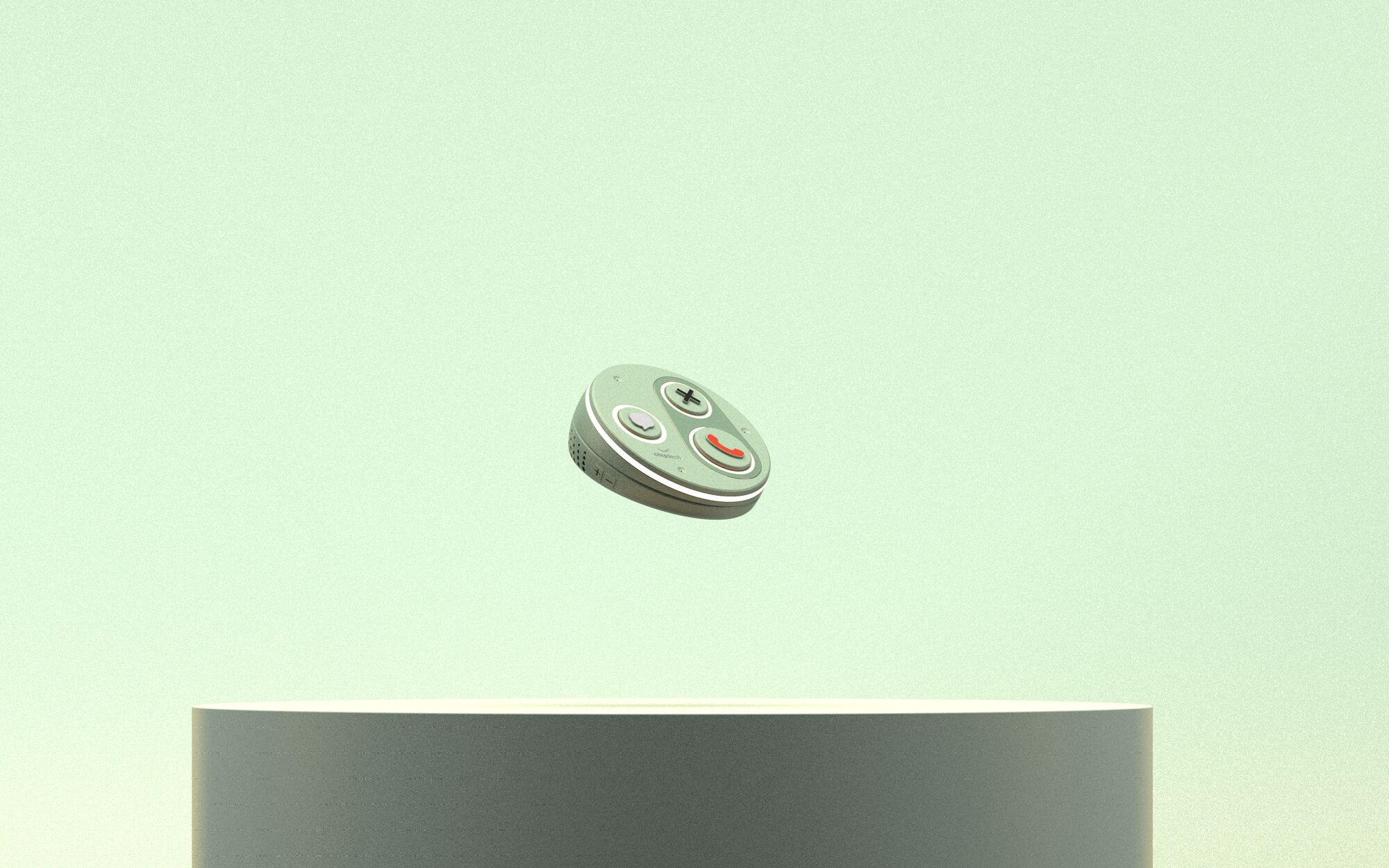
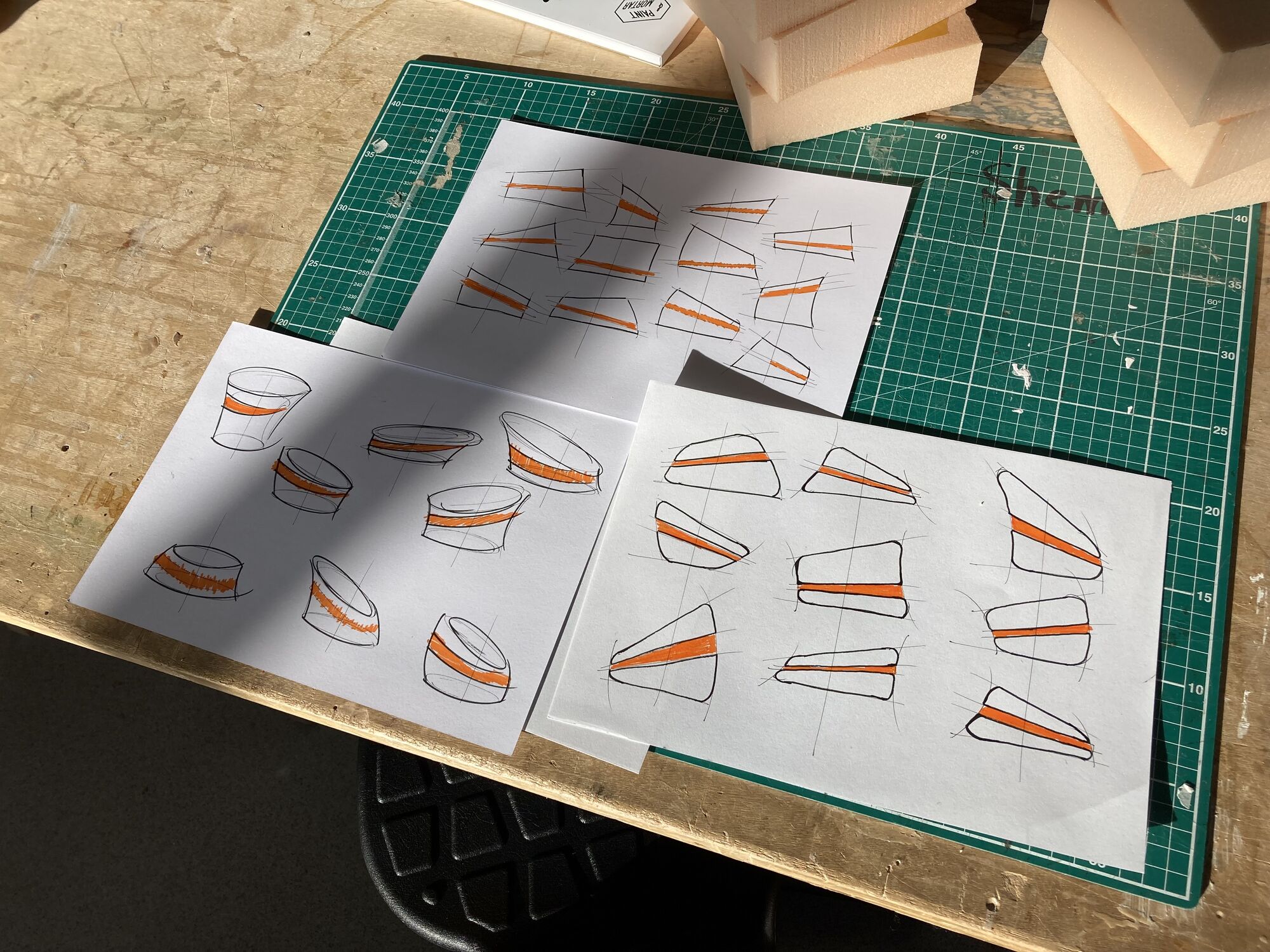
We wanted Chip to feel less like a static device and more like a presence in the room, so the form development focused on natural, organic shapes. The aim was to create an entity of sorts rather than an appliance.
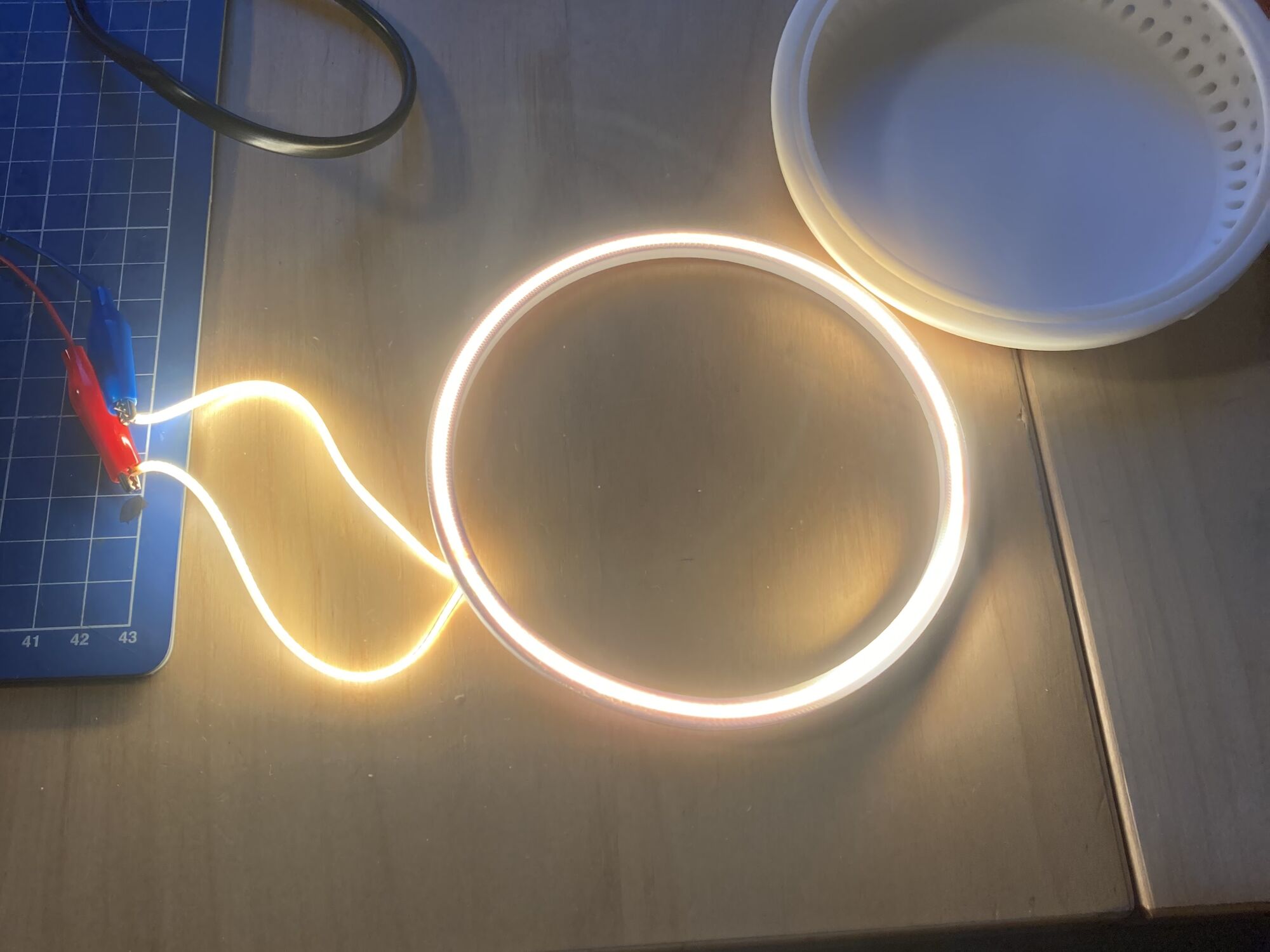
A ring light cuts through the body. It is ambient light that responds when Chip speaks and listens, adding to the sense that it is alive.
Buttons you can tell apart without looking
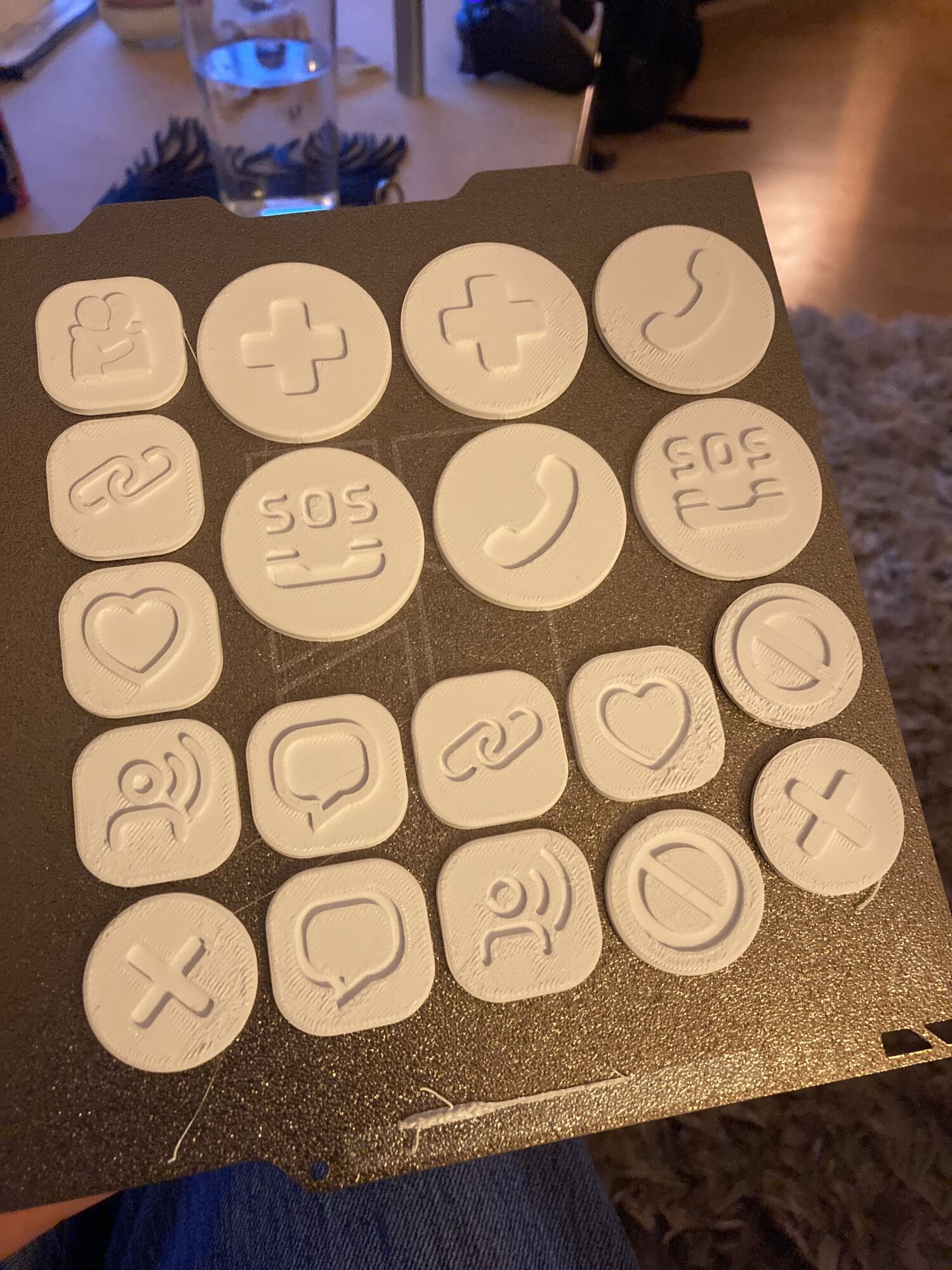
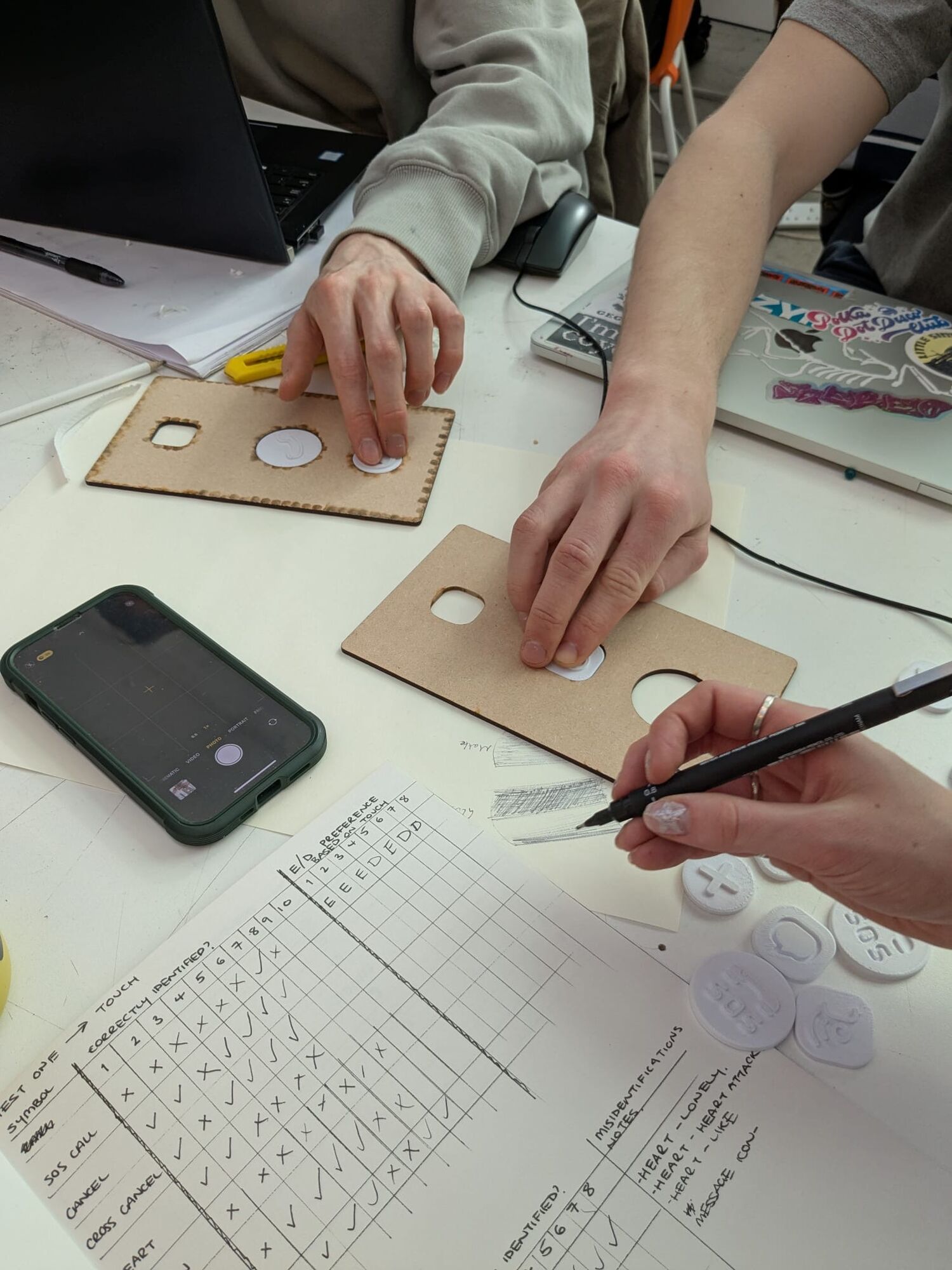
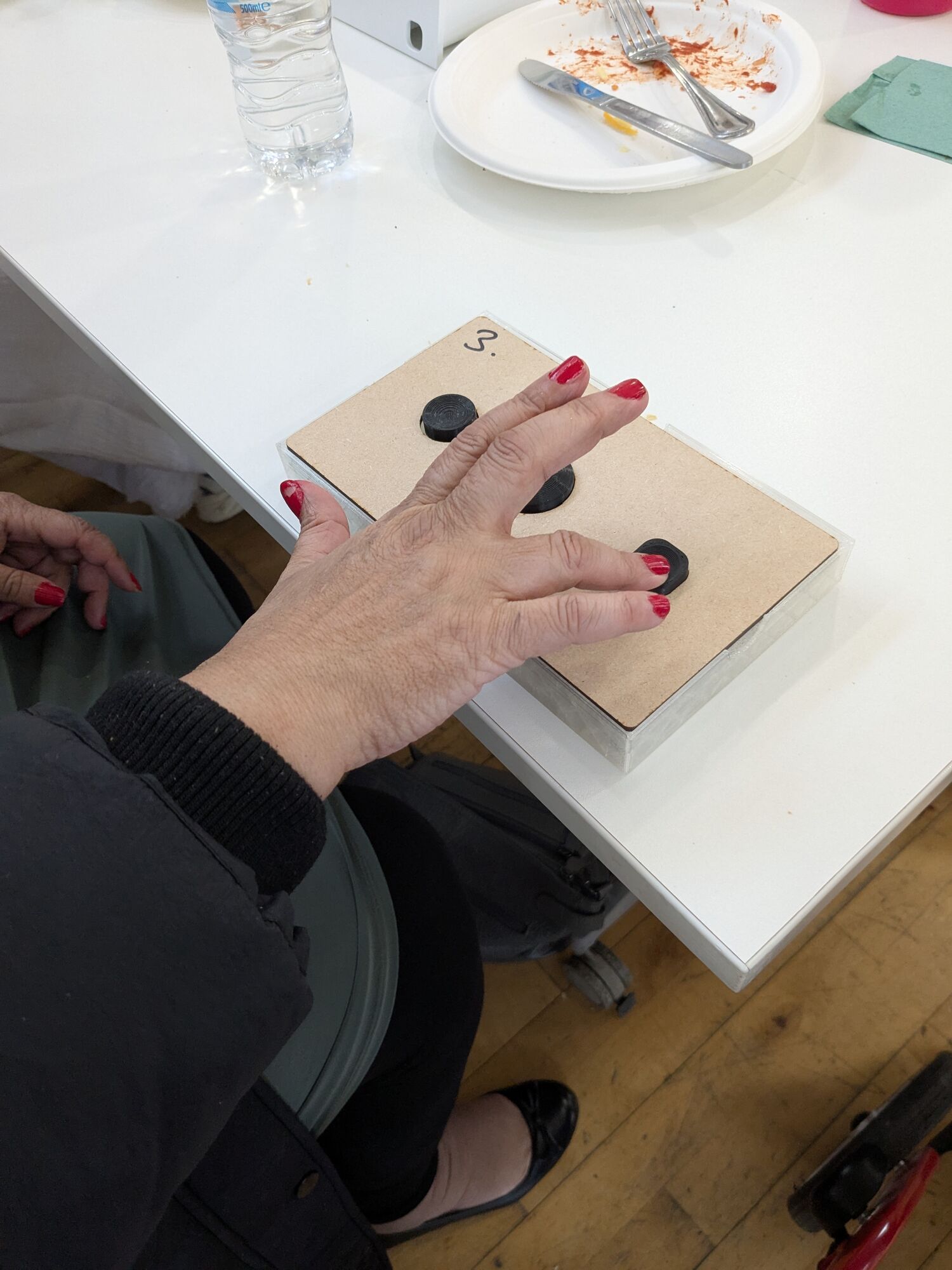
The buttons were the core of the design work, developed along two strands. The first was visual: buttons that elderly users and people with poor eyesight could recognise and tell apart. The second was touch: every press had to give clear, reassuring feedback, and each button had to feel different so users knew which one they'd pressed without looking.
We explored five tactile variants: embossed, debossed, concave, convex and braille. Each button used a momentary switch with a 10 mm compression spring, tuned to balance travel and feedback.
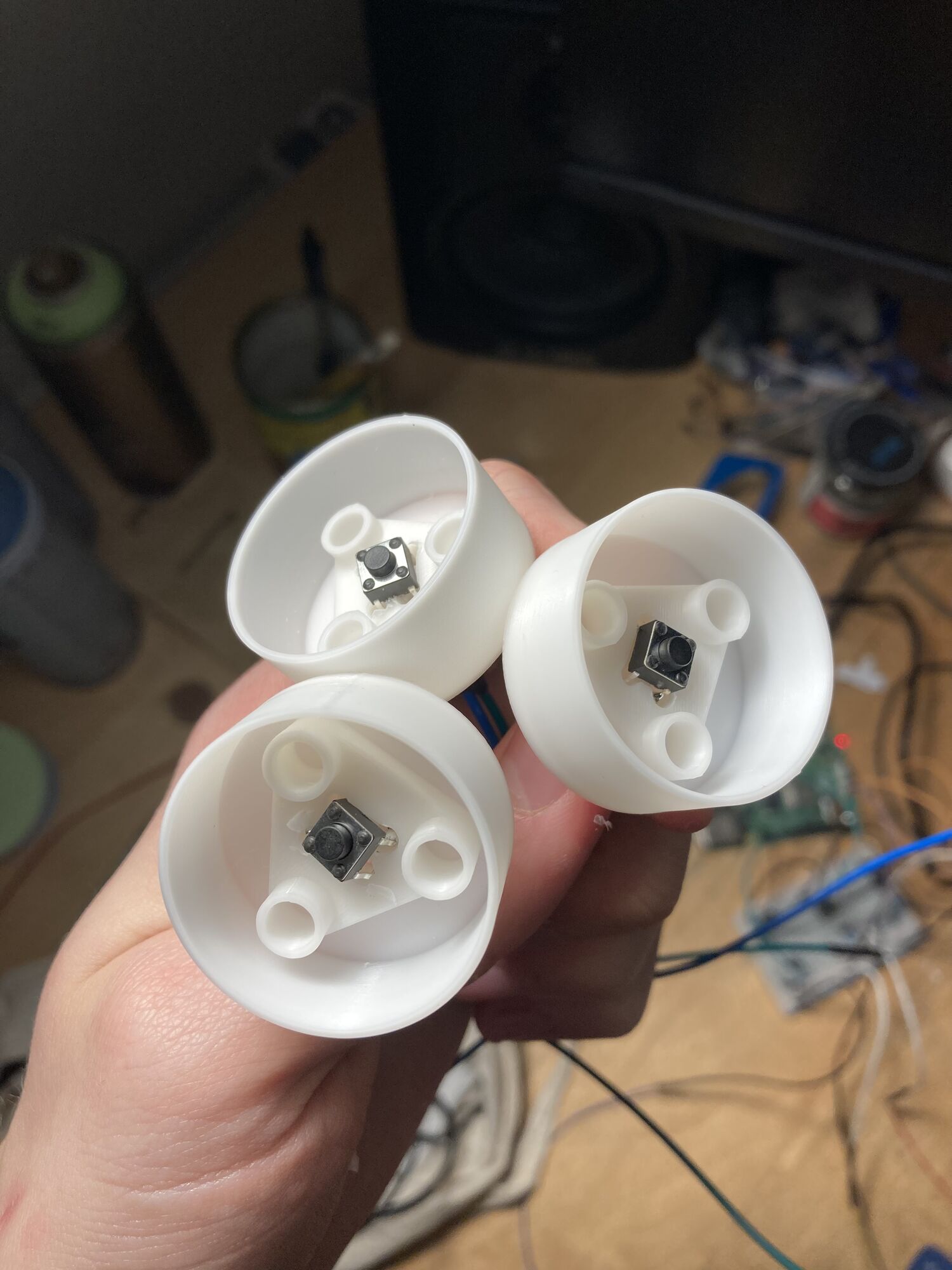
We built a custom test jig so residents could try the variants and give feedback, and we iterated through many versions.
A voice assistant for company
Because the research pointed so strongly at loneliness and an overstretched care system, we wanted Chip to offer companionship and practical support, not only emergency response.
I led the build of a working conversational AI on a Raspberry Pi. It reads out messages, gives schedule updates, holds a wellbeing chat and checks in with reminders. Speech to text runs locally for privacy, with trusted services for the replies.
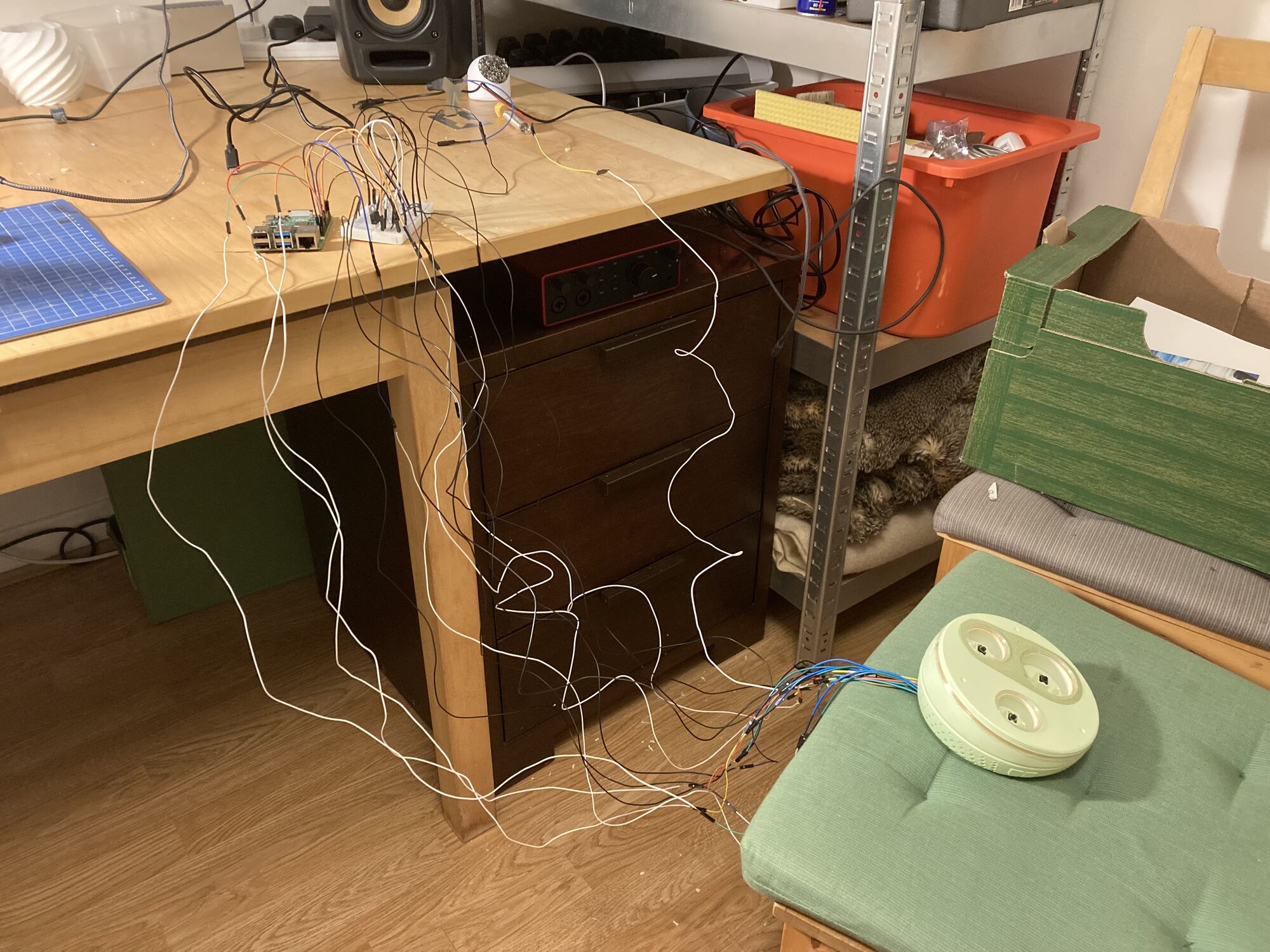
We demoed it live at the exhibition, where residents and visitors responded well.
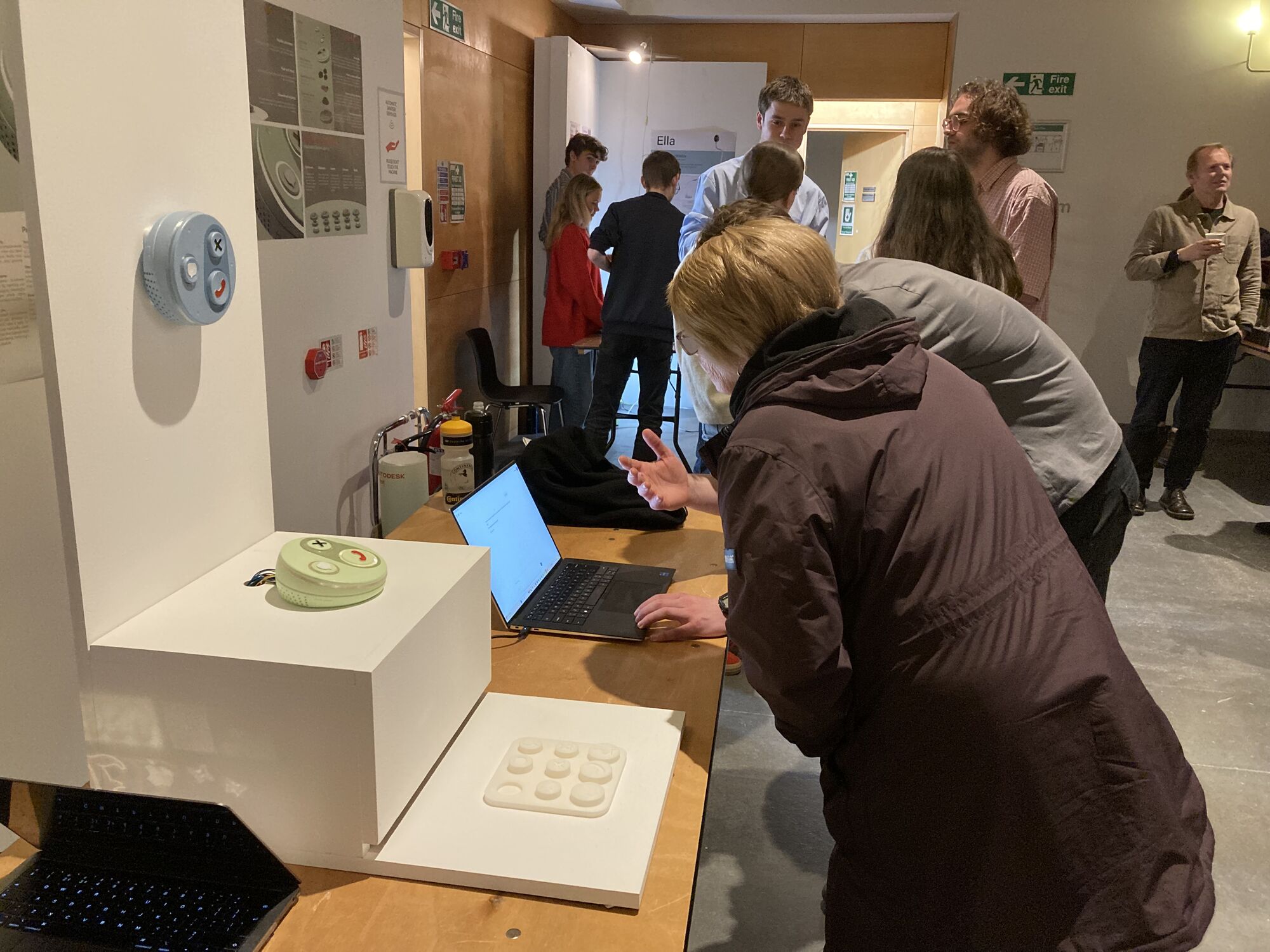
The final concept
- The ring light and lit rings around each button show what Chip is doing, so it feels alive
- Mounts flat on a wall or sits on a table at 15°, so it can be seen from a wheelchair
- A 180° twist switches between the two positions and folds the device flat for packaging
- A six microphone array with noise reduction, isolated from the speaker, so calls work over a TV or radio
Outcome
Chiptech selected Chip as the winning design from across the year group.