Retail Therapy
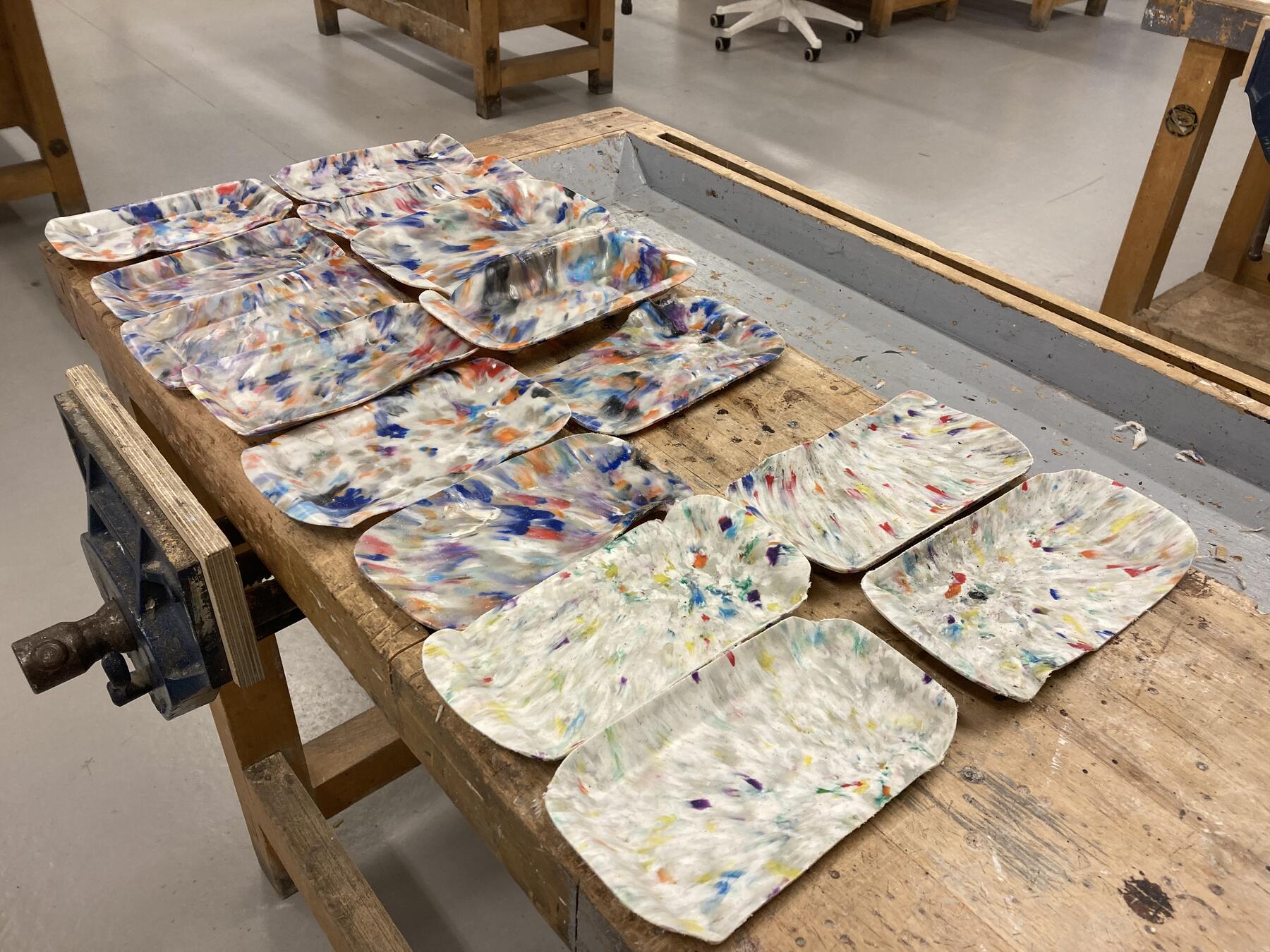
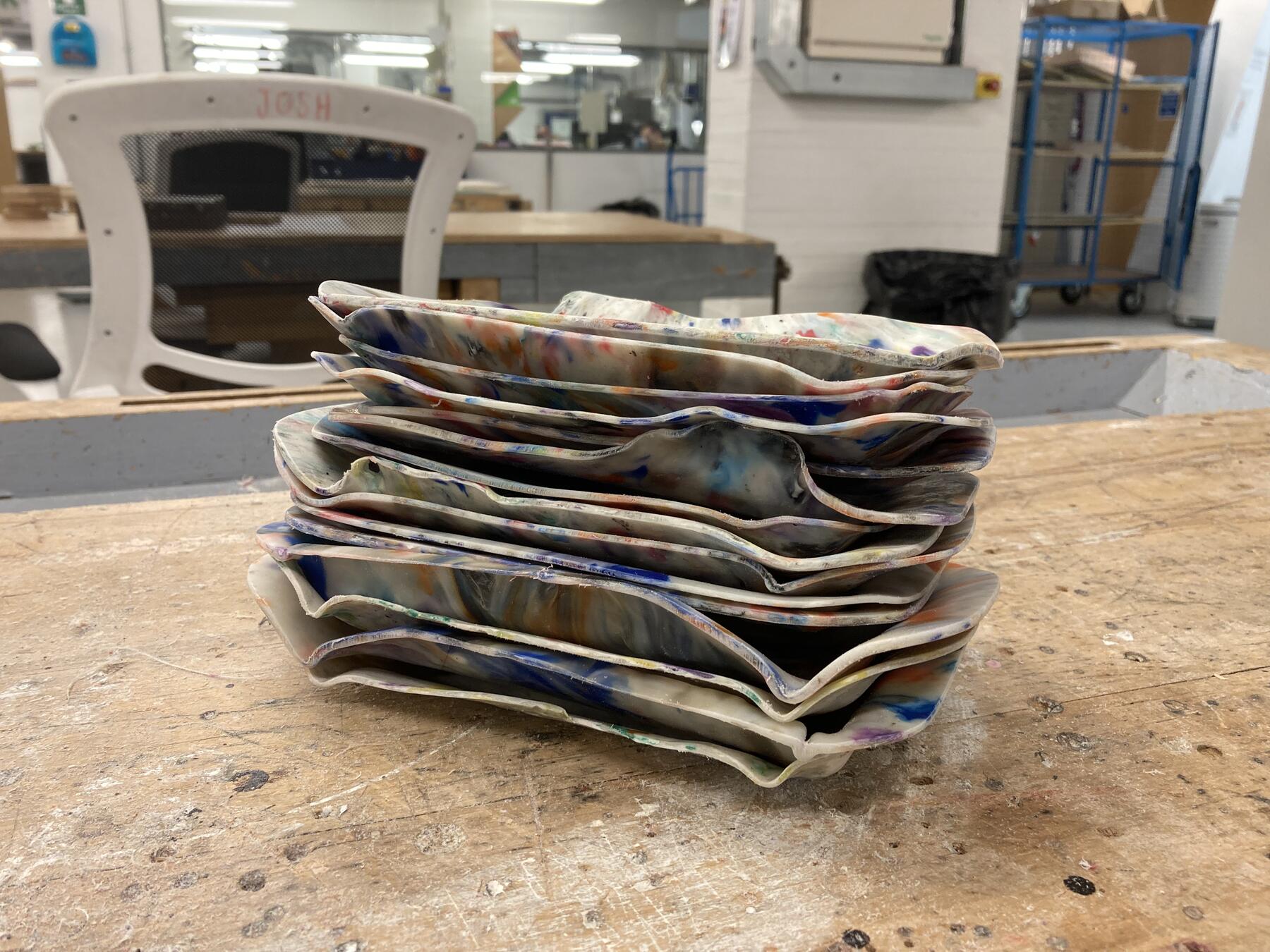
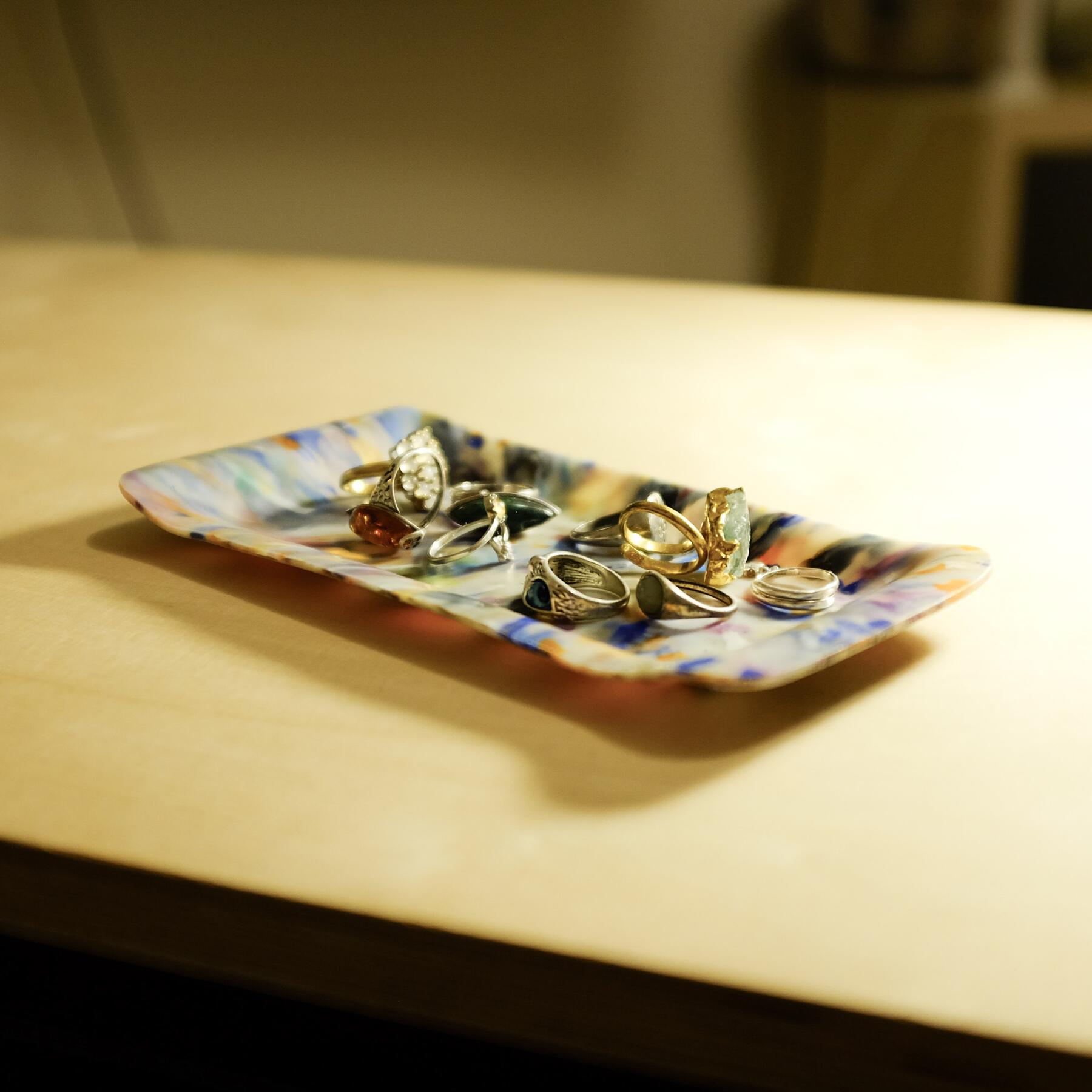
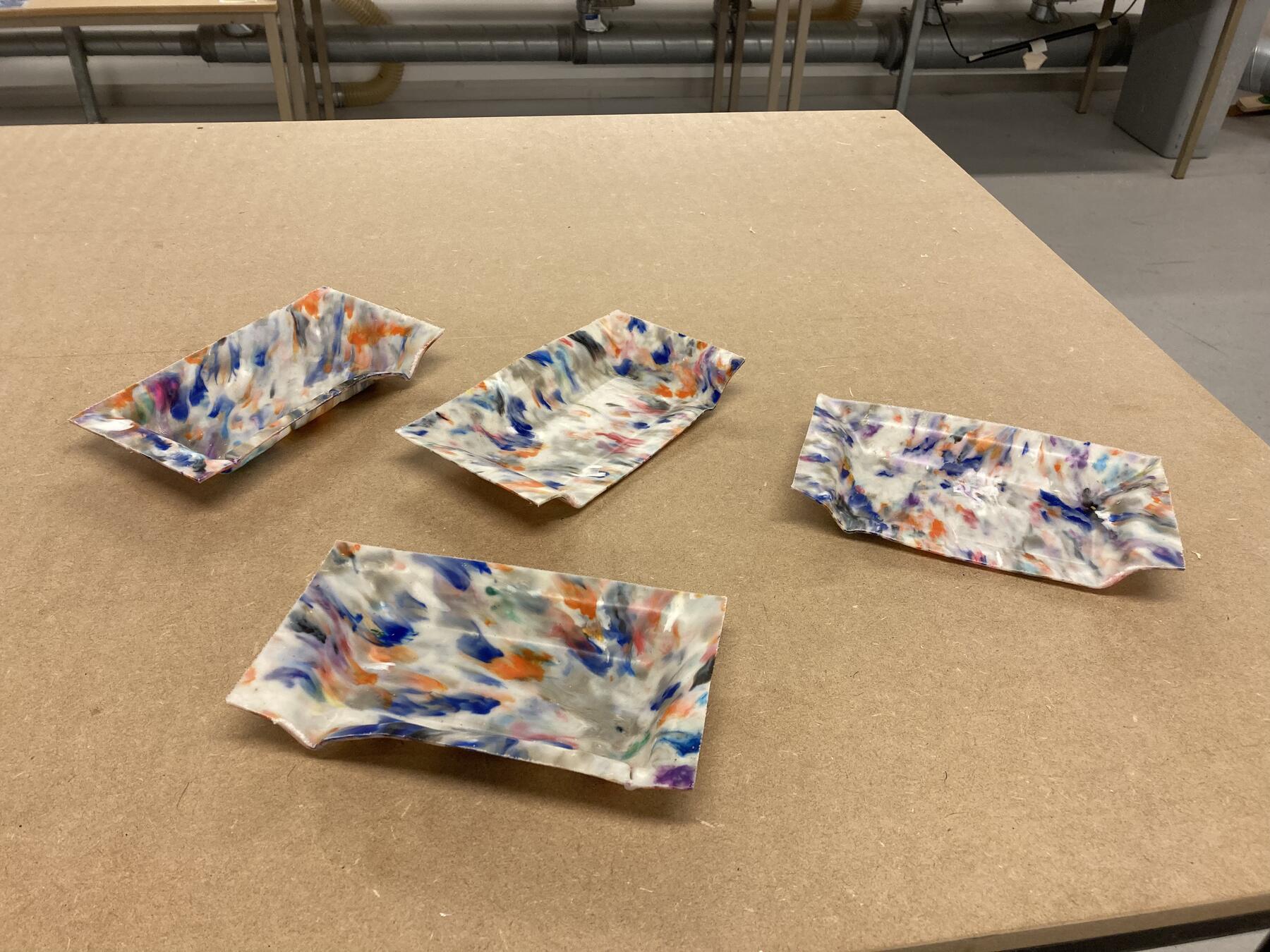
Trinket trays vacuum formed from recycled HDPE sheet I made from local waste. A batch of twelve, all sold.
The brief
A semester-long project to design a product, make it in a small batch and sell it in a shop at the end of term. I treated it as an exploration of recycled plastics: could I take local waste all the way to a finished product someone would buy?
Collecting the plastic
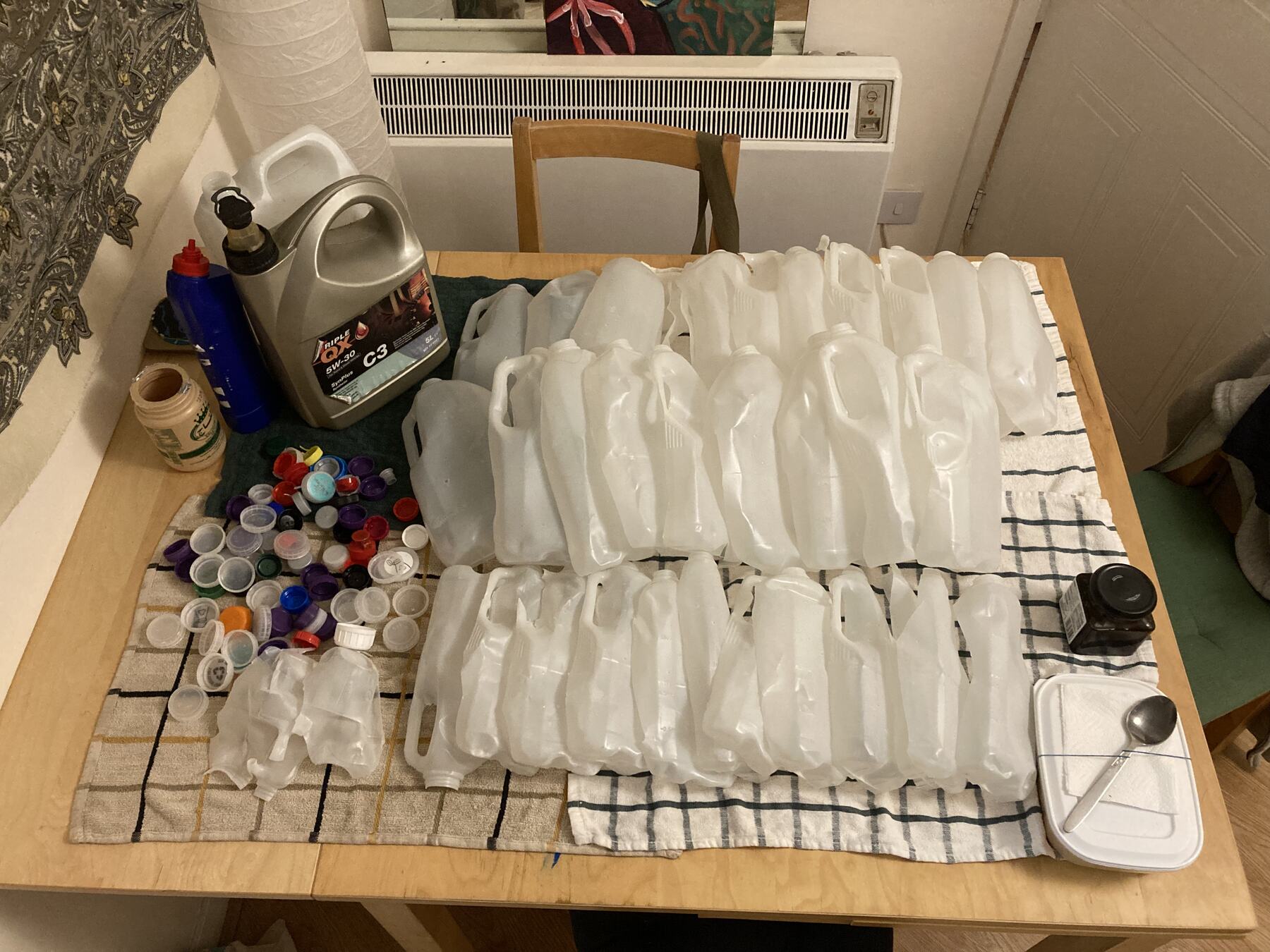
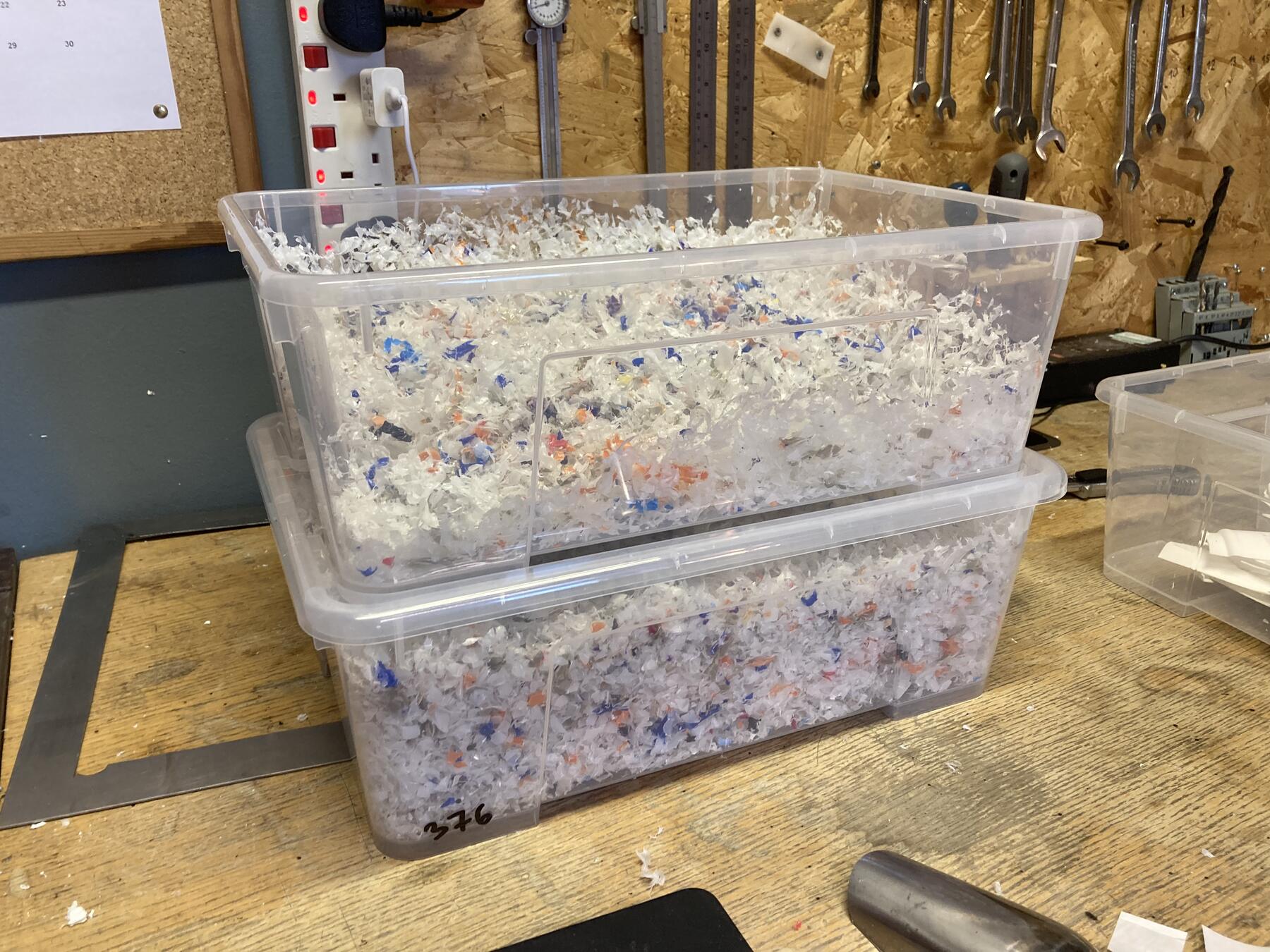
I collected plastic from classmates, local cafes, collection bins around the university and my own waste, and gathered over a kilo of high-density polyethylene (HDPE). It had to be shredded at least eight times to get the particles small enough to use.
Making the sheet
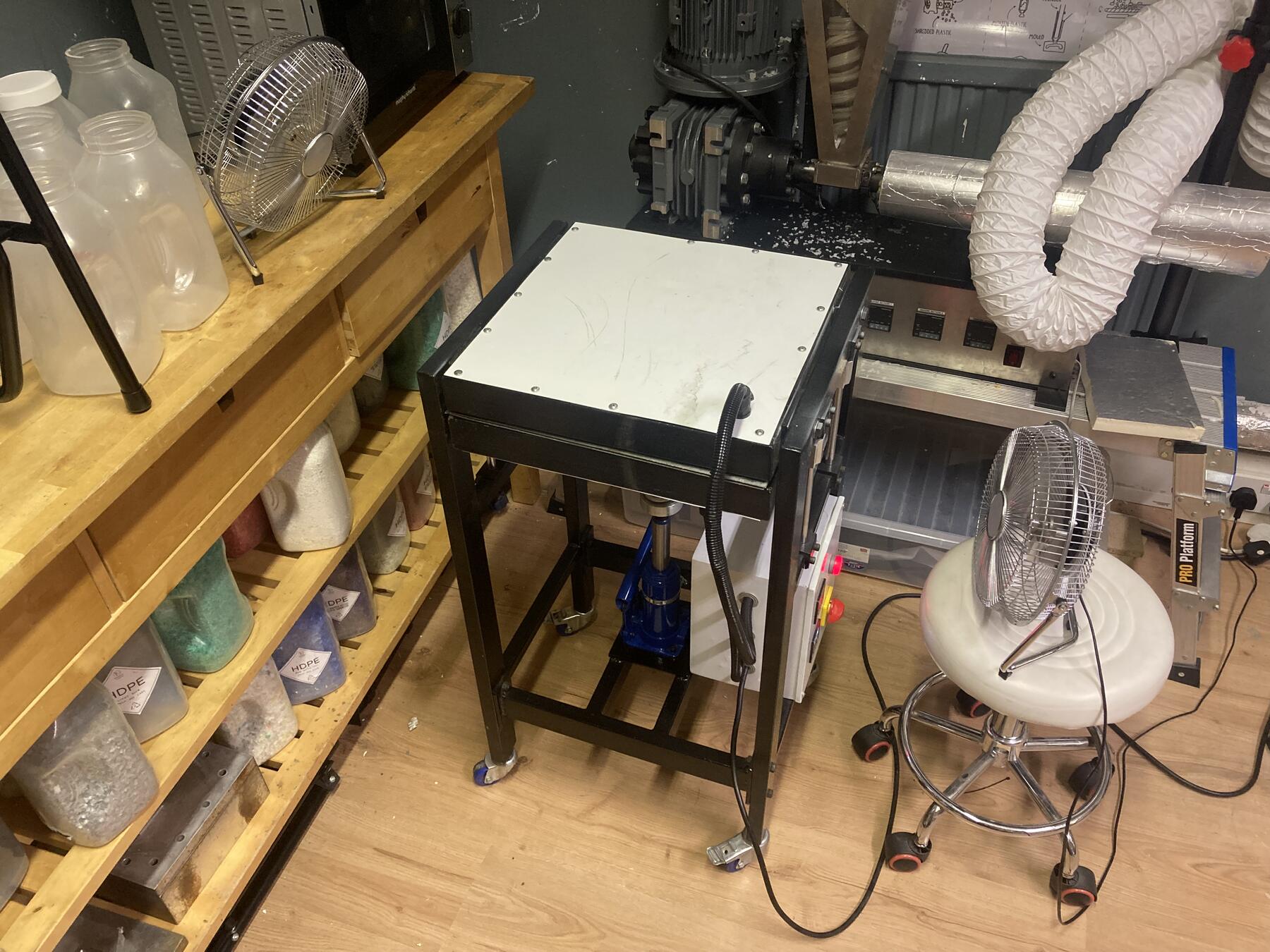
At the start of the project I took the train to Edinburgh to meet Bart, who runs Doba Studio. When I saw his sheet press, I asked whether it could make sheets thin enough to vacuum form. He wasn't sure about the forming, but thought the sheet was possible.
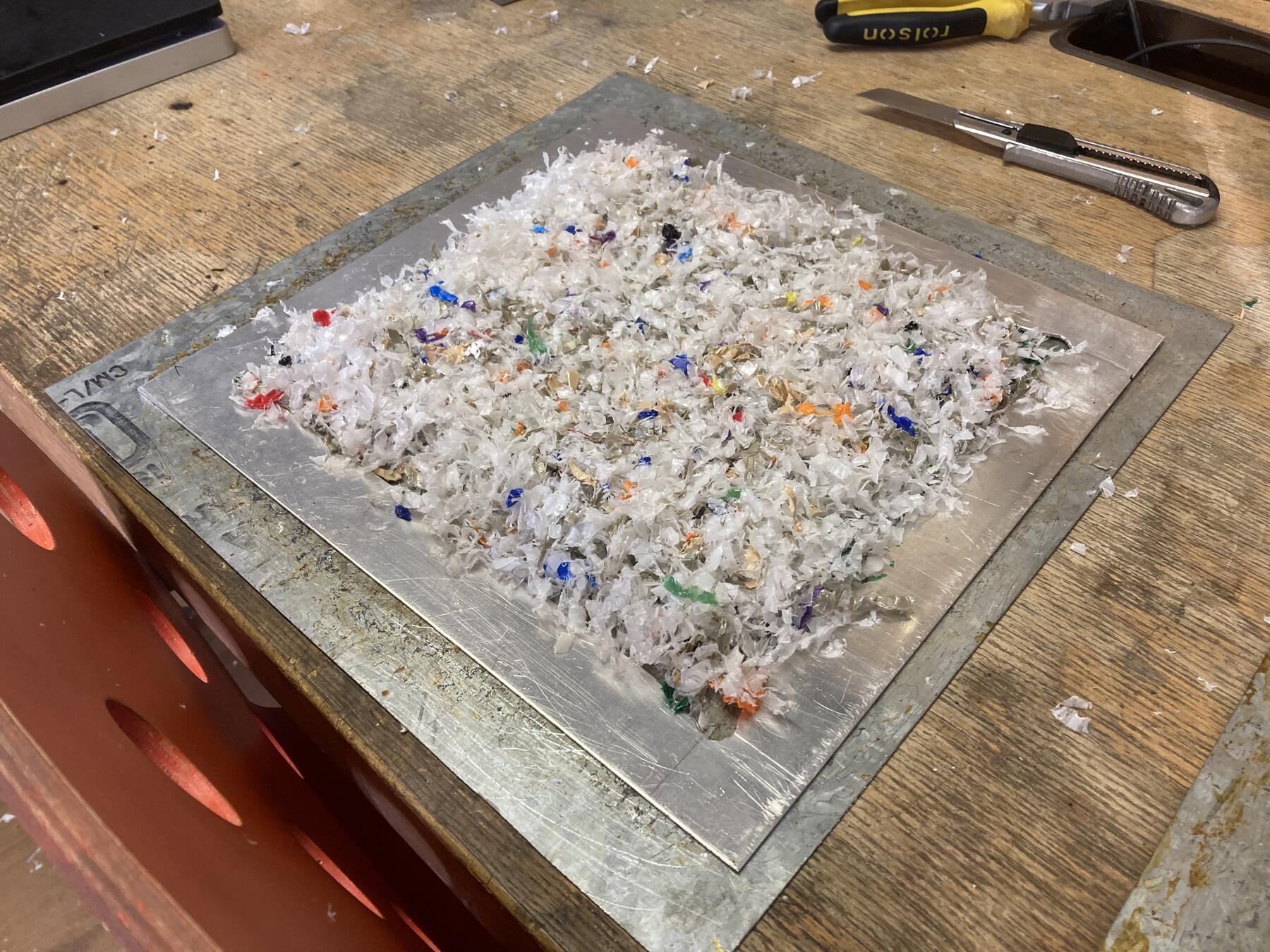
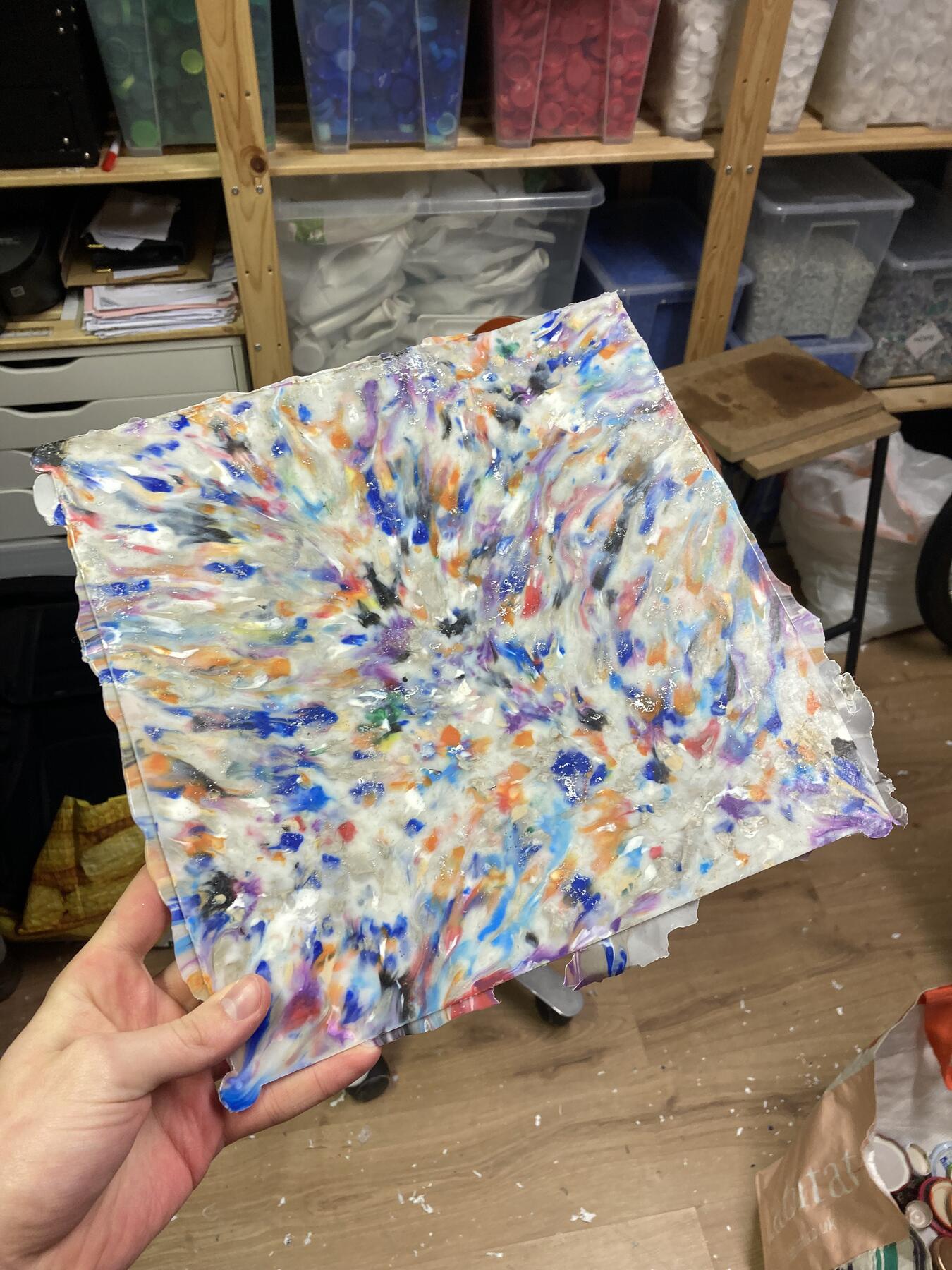
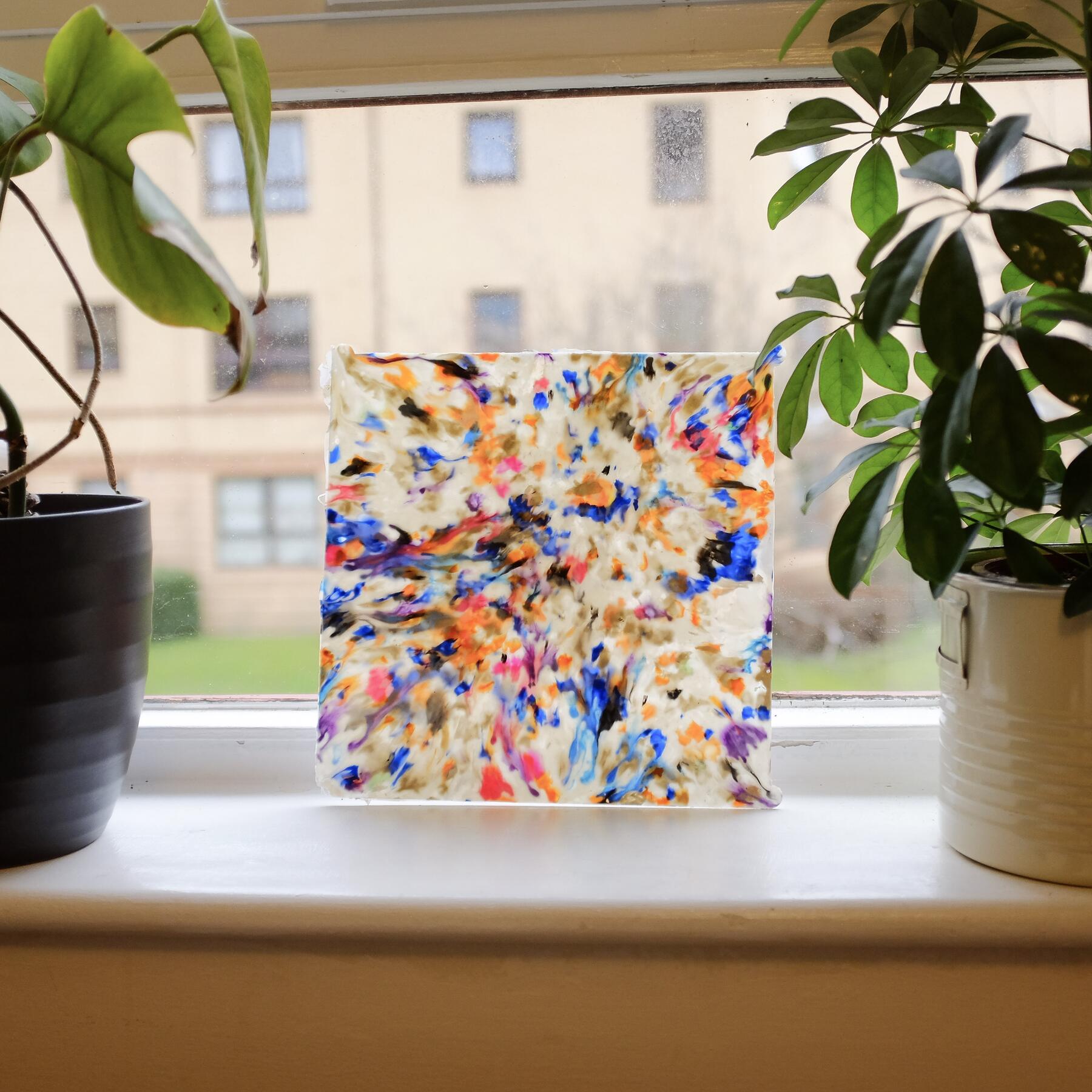
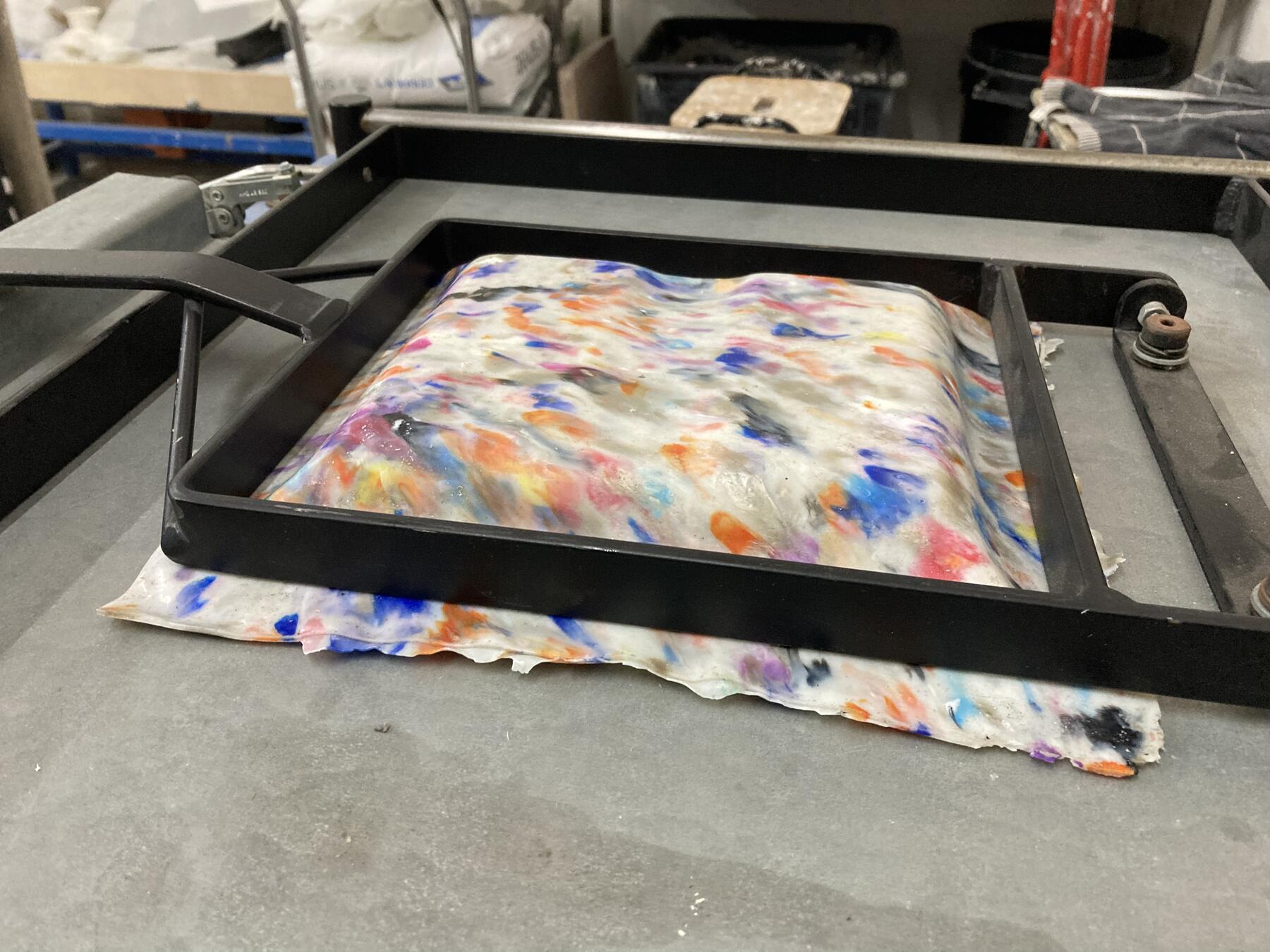
The press heats two metal plates to around 200°C and squeezes them together with a one tonne hydraulic bottle jack. Shredded plastic is packed into a metal frame, welded for me by the GSA metal workshop, melted between the plates, then cooled into a new 3 mm sheet.
Why vacuum forming
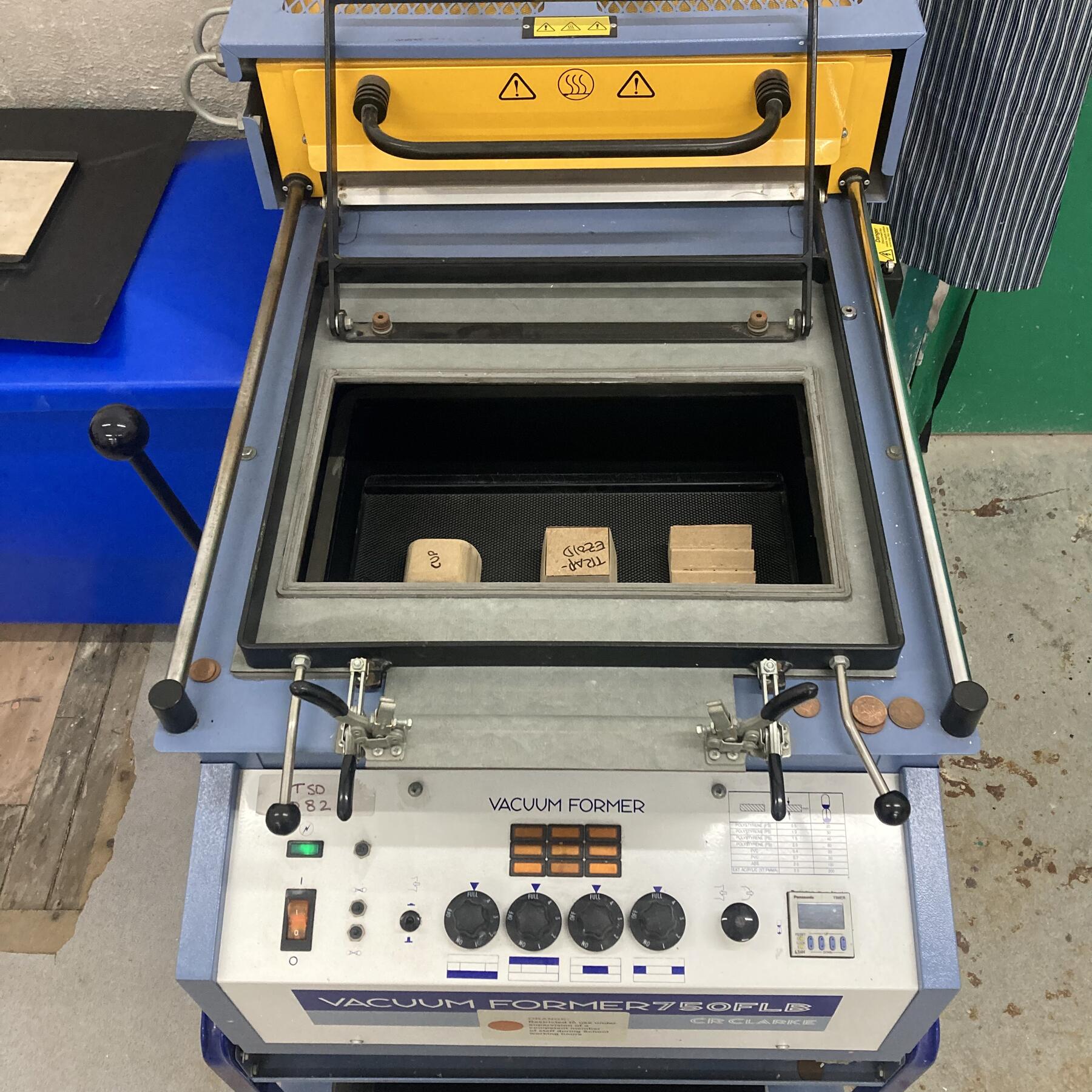
Most ways of making three-dimensional plastic products, like injection moulding, were out of reach on cost and equipment. Vacuum forming heats a sheet until it softens, then pulls the air out from underneath so the sheet wraps around a former.
Forming my own recycled sheet was an unconventional pairing, and there was no data on how it would behave, so I started by learning the machine with simple test formers.
Starting with bowls
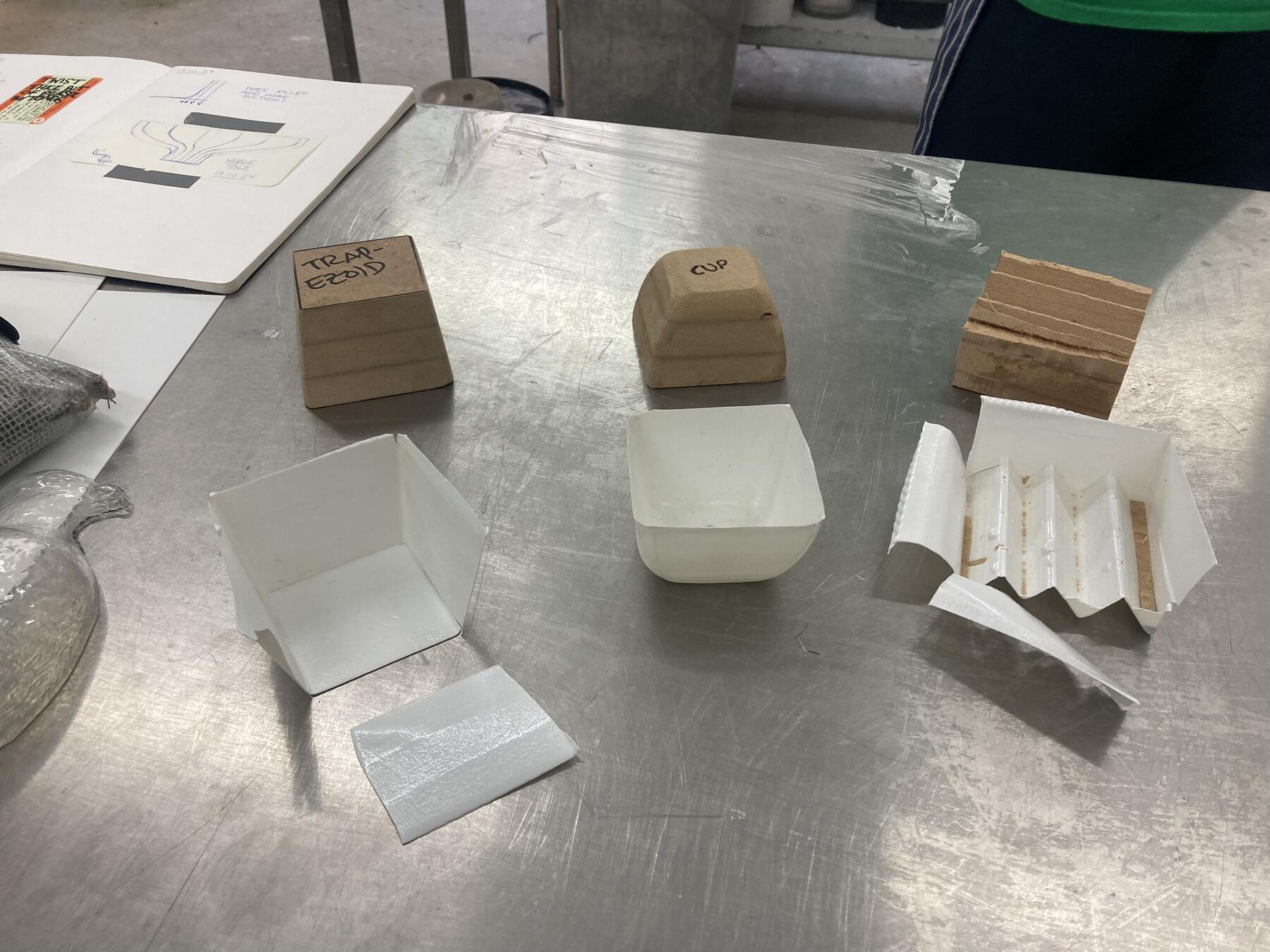
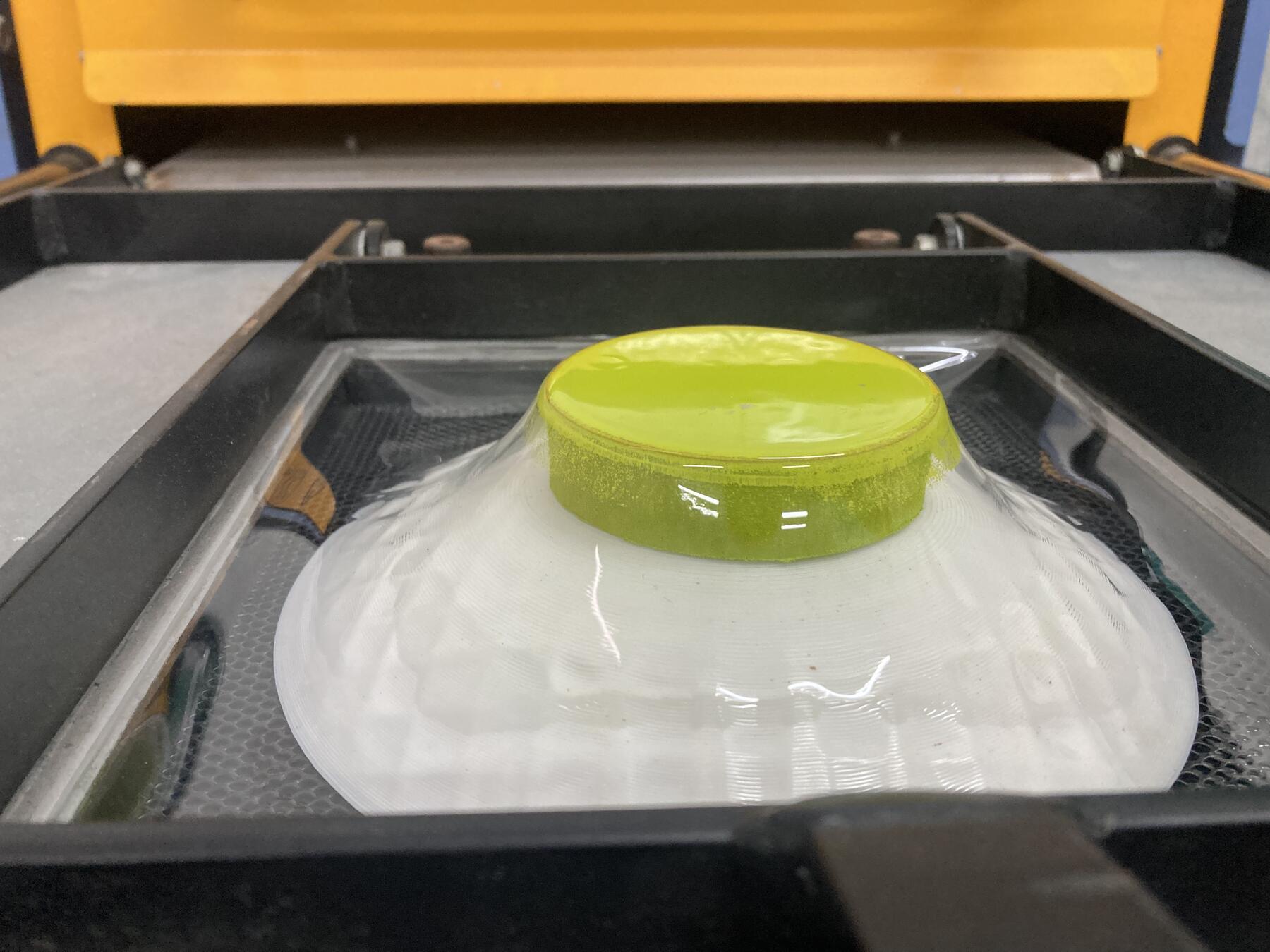
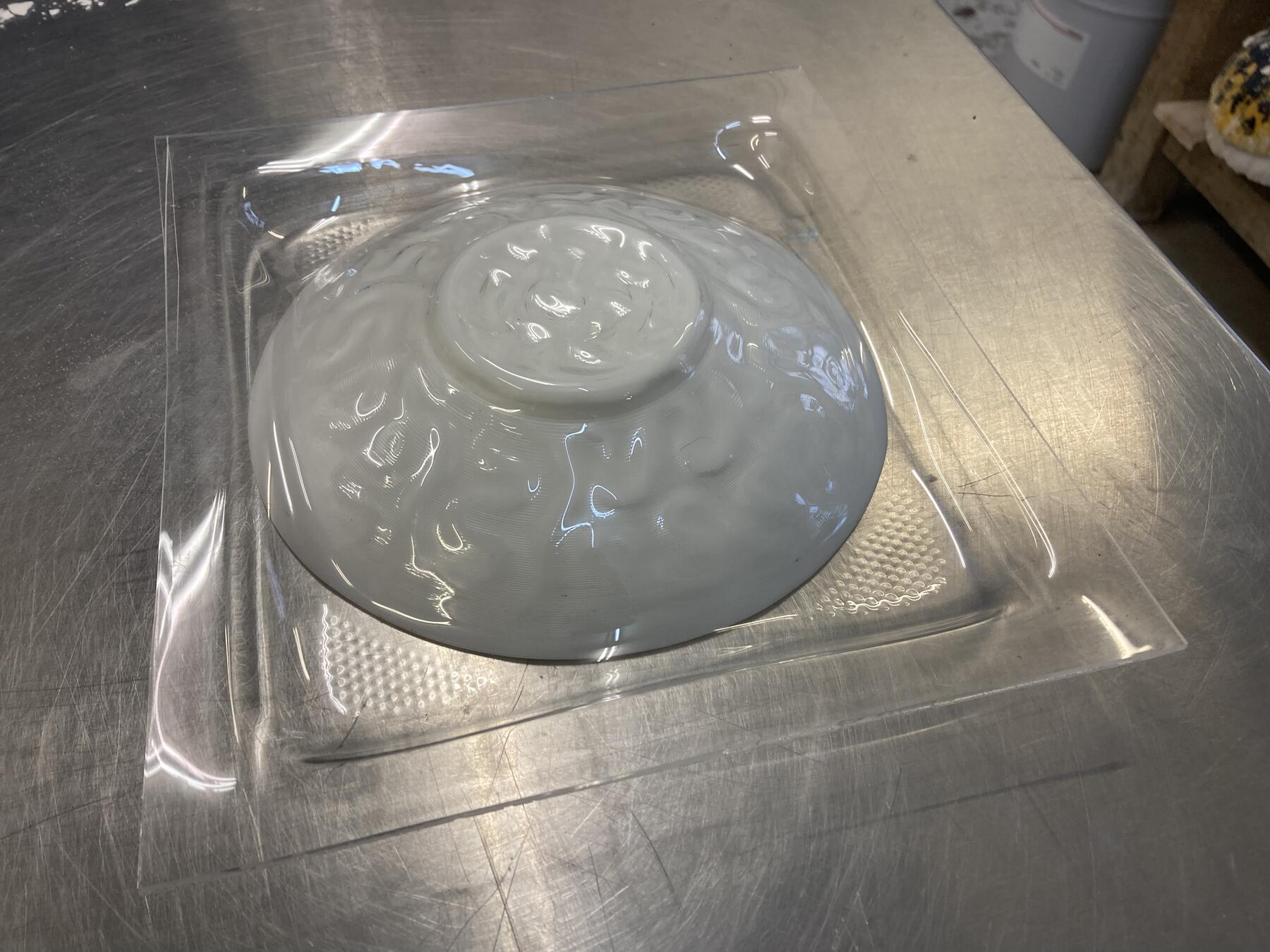
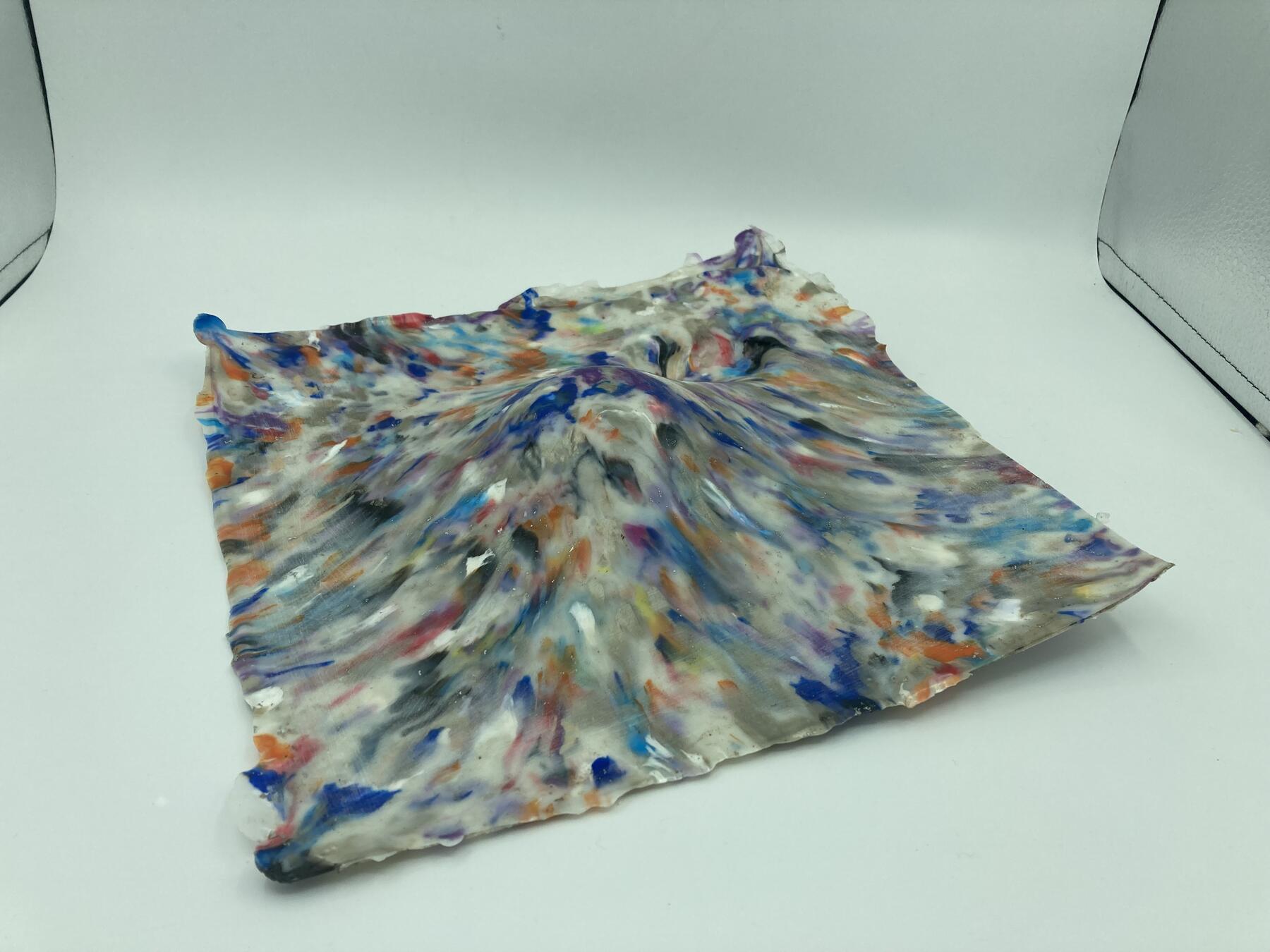
My first idea was a fruit bowl, inspired by a visit to the V&A in London and a shape that suits vacuum forming. I tested formers with stock sheet first, then moved on to my own recycled sheet.
Letting the material lead
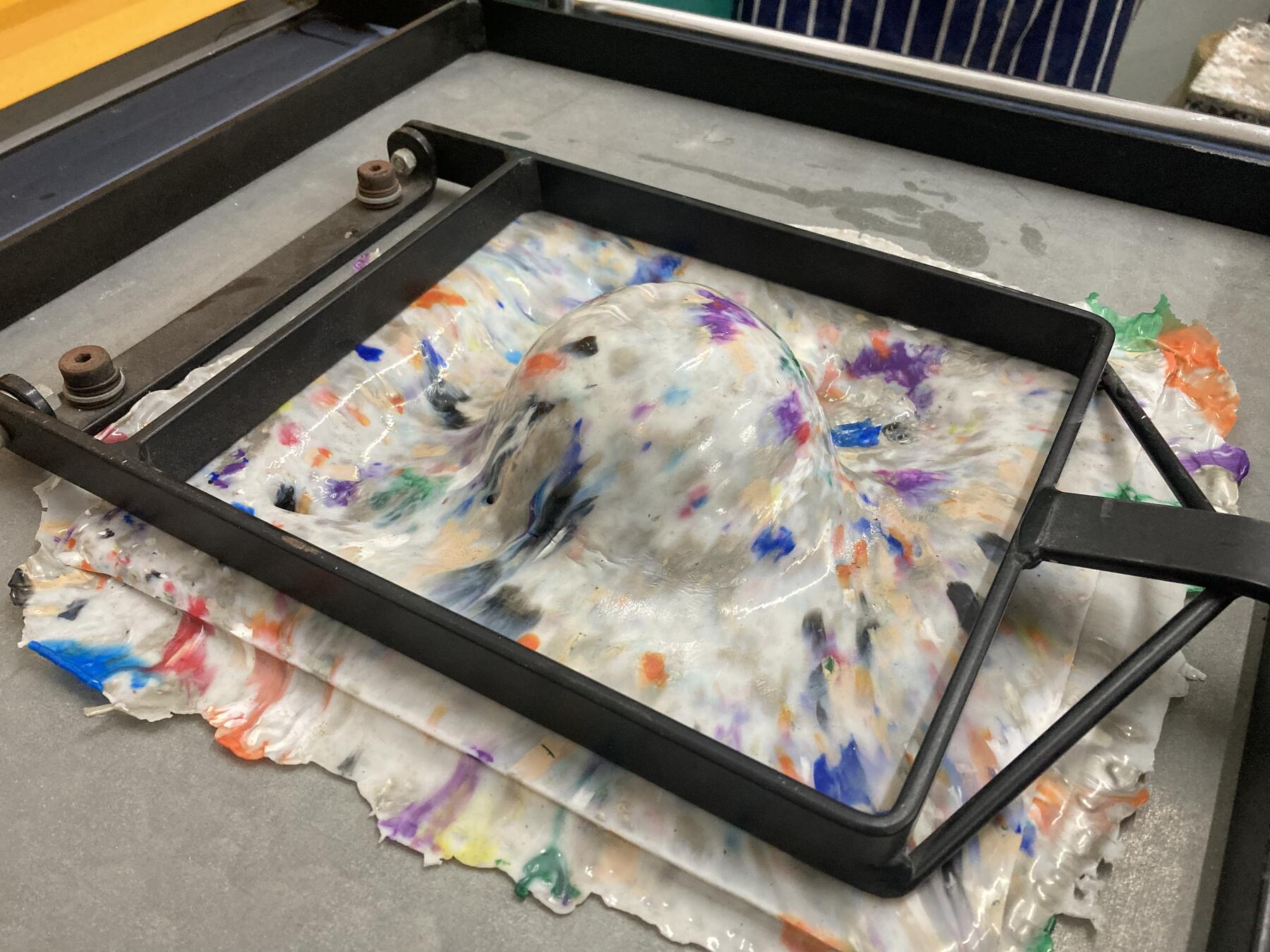
The recycled sheet couldn't reliably take deep draws. The waste came from milk bottles, bottle lids and other containers, so even though it was all HDPE the melt varied from sheet to sheet, and small air bubbles made sheets pop mid-form. I didn't want to push the heat higher and risk toxic fumes in the workshop. Bowls also wasted a lot of sheet, and with the size of each sheet and the deadline I needed two products from every one.
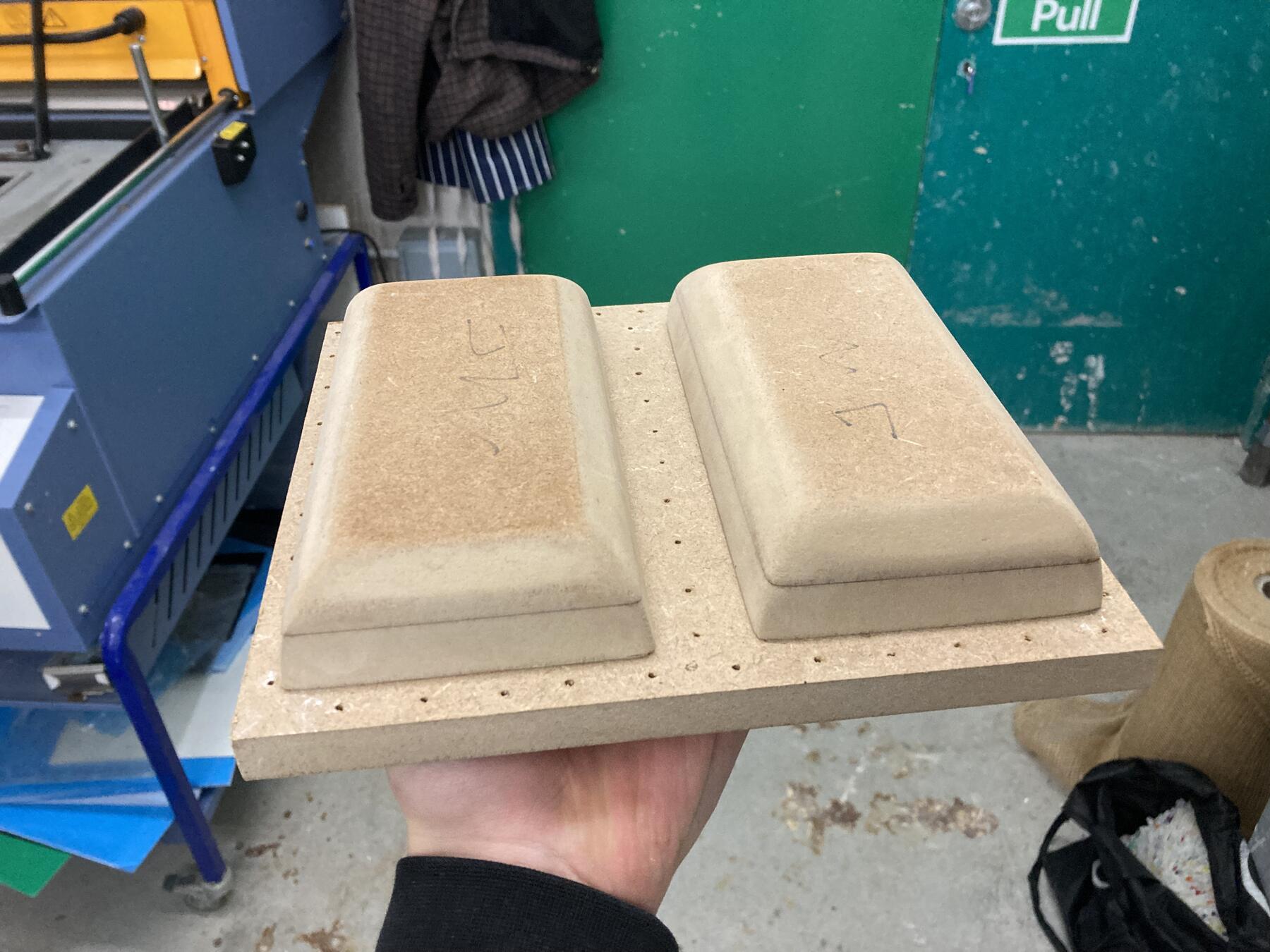
So instead of forcing a deeper object, I designed shallow trinket trays that need very little stretching. I made the formers from laminated MDF on a drilled base plate for more even suction, two trays to a sheet. The material's limits shaped the product, and the shallow form let me produce trays consistently across the batch.
Outcome
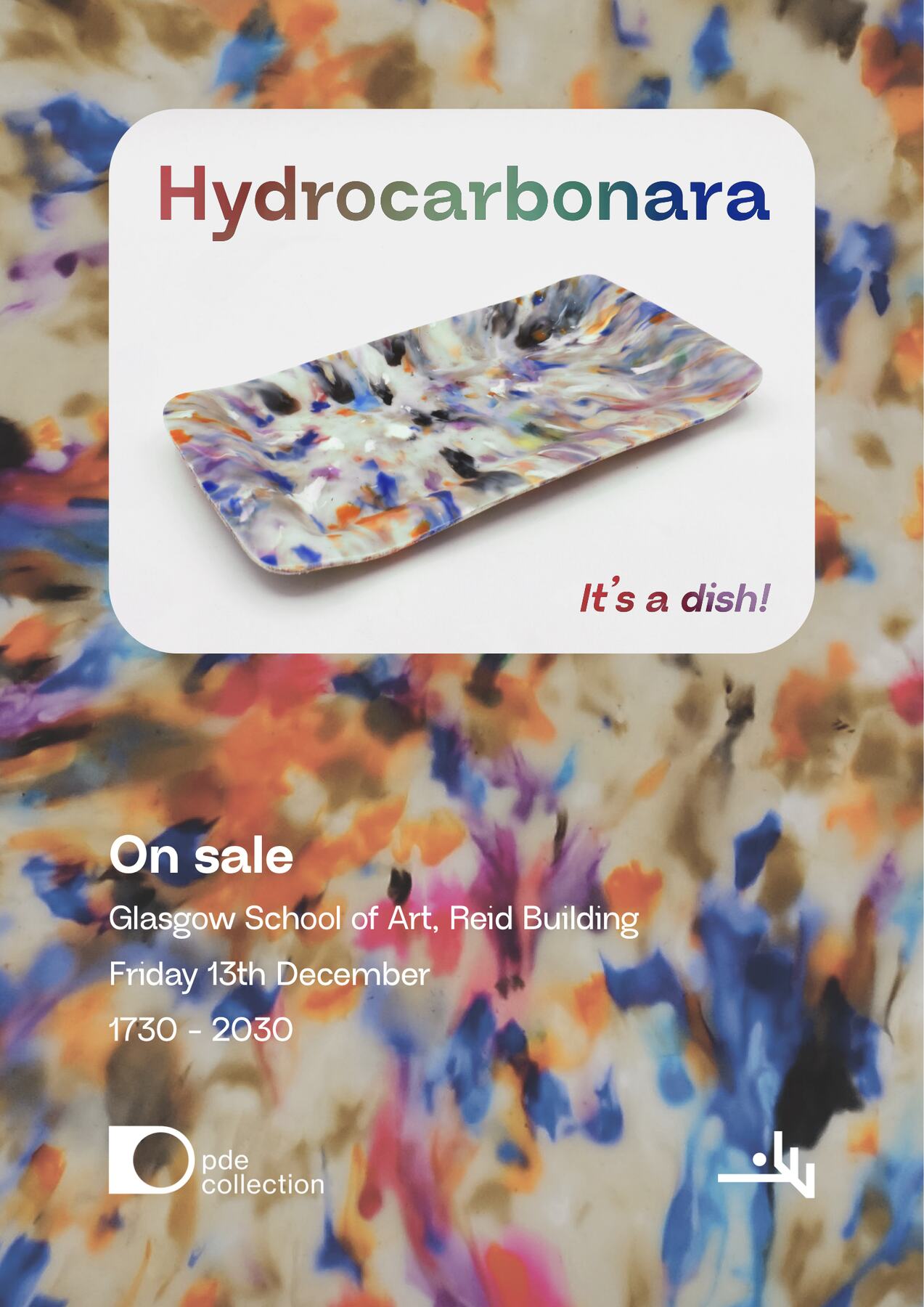
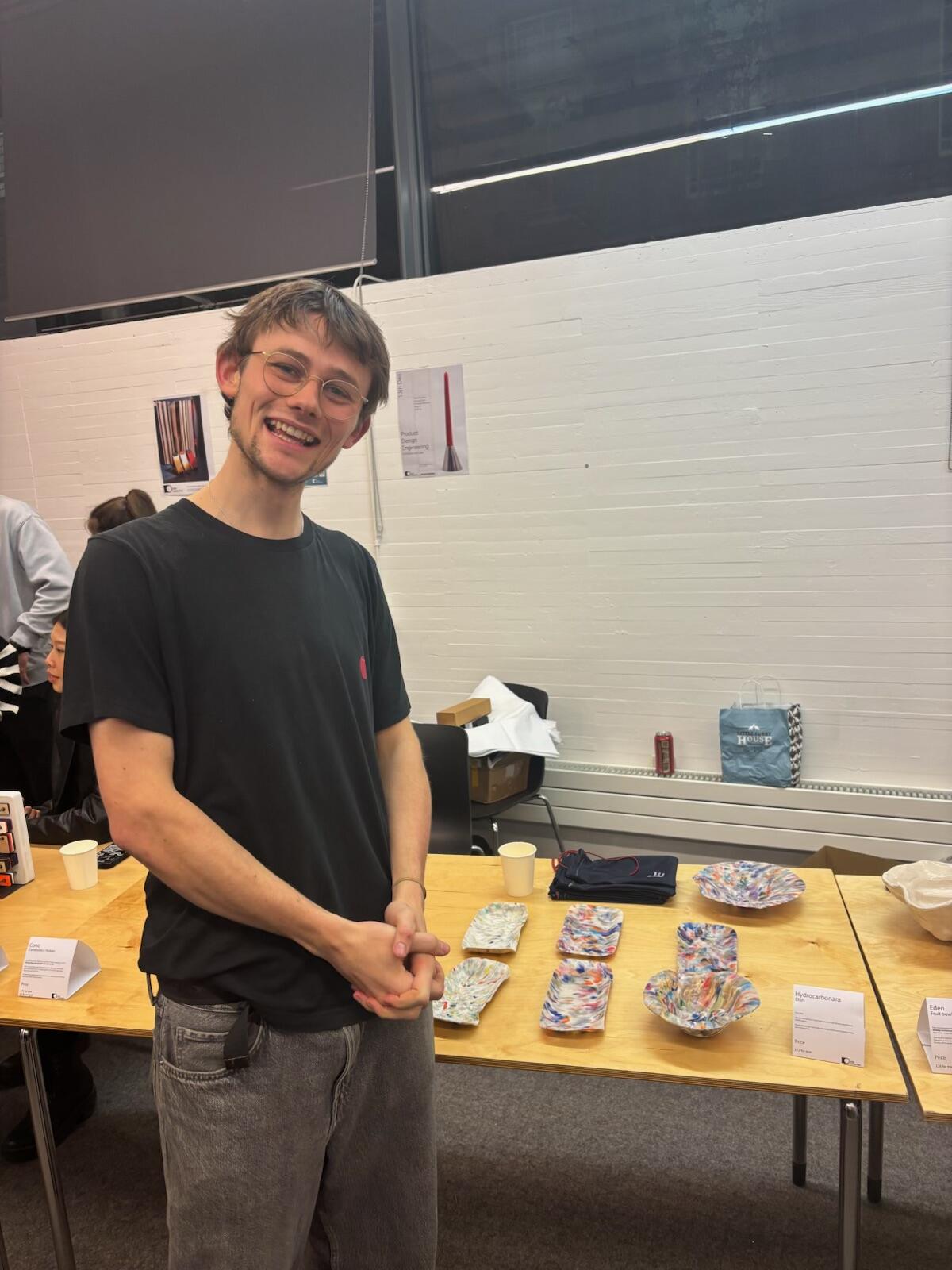
I produced a batch of twelve trays and sold them as Hydrocarbonara at the Retail Therapy shop at the end of the semester. All twelve sold.
It worked thanks to some brilliant people: Bart at Doba Studio, and Helen at GSA, who helped me develop the vacuum forming process and was rightly anxious when I first proposed forming homemade recycled sheet.