
ear3
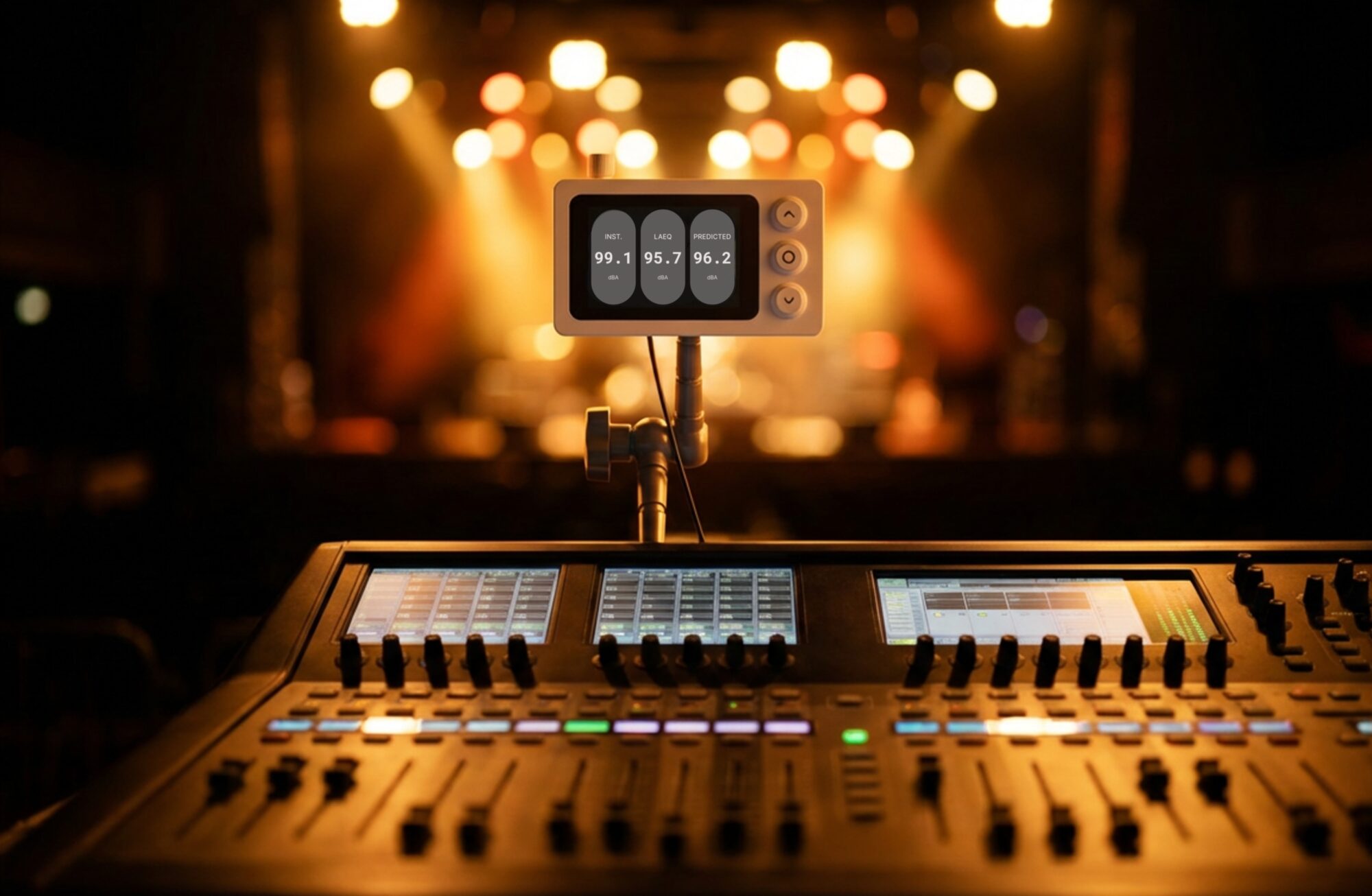
A low-cost sound level meter that helps grassroots music venues keep audience noise exposure within WHO safe listening guidelines.
The problem
The WHO estimates that over a billion young people are at risk of hearing loss, and in 2025 RNID found that 58% of young people report hearing loss or tinnitus after live music.
Noisy workplaces are heavily regulated and personal listening devices have limits built in, but the UK live music sector has no mandatory regulation to protect audience hearing. Current advice puts the burden on individuals, and it fails: most people fit earplugs incorrectly, foam plugs dull the sound, and in a small venue there is often nowhere quieter to stand.
Professional monitoring systems cost thousands and need technical training, which prices grassroots venues out of safety.
The brief
Protecting audience hearing should be a collective responsibility, not an individual one.
Design a low-cost, non-technical sound level meter that needs no prior training, so grassroots venues can regulate themselves. The key measure is LAeq 15 min, the average sound level over the last 15 minutes, which the WHO Global Standard for Safe Listening Venues and Events recommends keeping below 100 dB.
Research
I spoke to sound engineers, DJs and venue managers. They told me they had no objective way to know how loud, or how harmful, their sound was, and that professional systems were too expensive and too complex.
Industry experts shaped the project from early on. Adam Hill, co-founder of the healthy listening initiative HELA, helped reframe the problem as the responsibility of whoever controls the sound, and pointed me to the WHO standard. Sound engineers Andy Horsburgh and Jonathan Digby changed the interface and the microphone, as described below. Venue visits showed me how cluttered and chaotic a working booth really is.
Mounting comes first
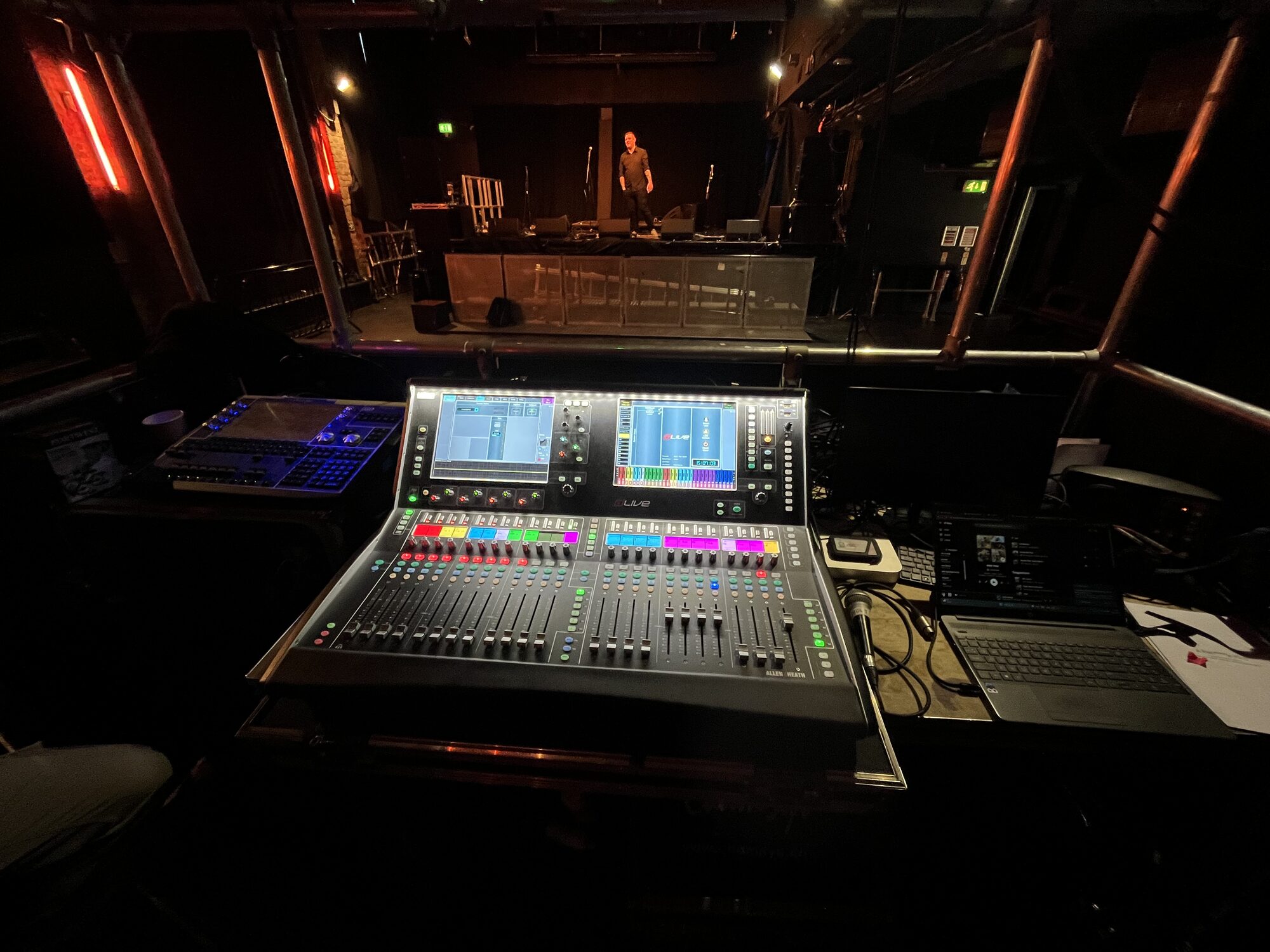
My early concepts were freestanding, with mounting as an afterthought. Venue visits showed there is little space and loose things get knocked to the floor, so mounting became a priority.
Industry consultation identified the 1/4"-20 thread as the standard for venue equipment, so I added heat-set threaded inserts and the device now screws straight onto kit such as a magic arm. I also prototyped a quick-release magnetic plate, then rejected it after expert feedback: the risk of the device falling onto expensive equipment was too high.
Buttons over a touchscreen
I assumed users would accept a touchscreen because it is cheaper. Sound engineers told me they value reliability over convenience.
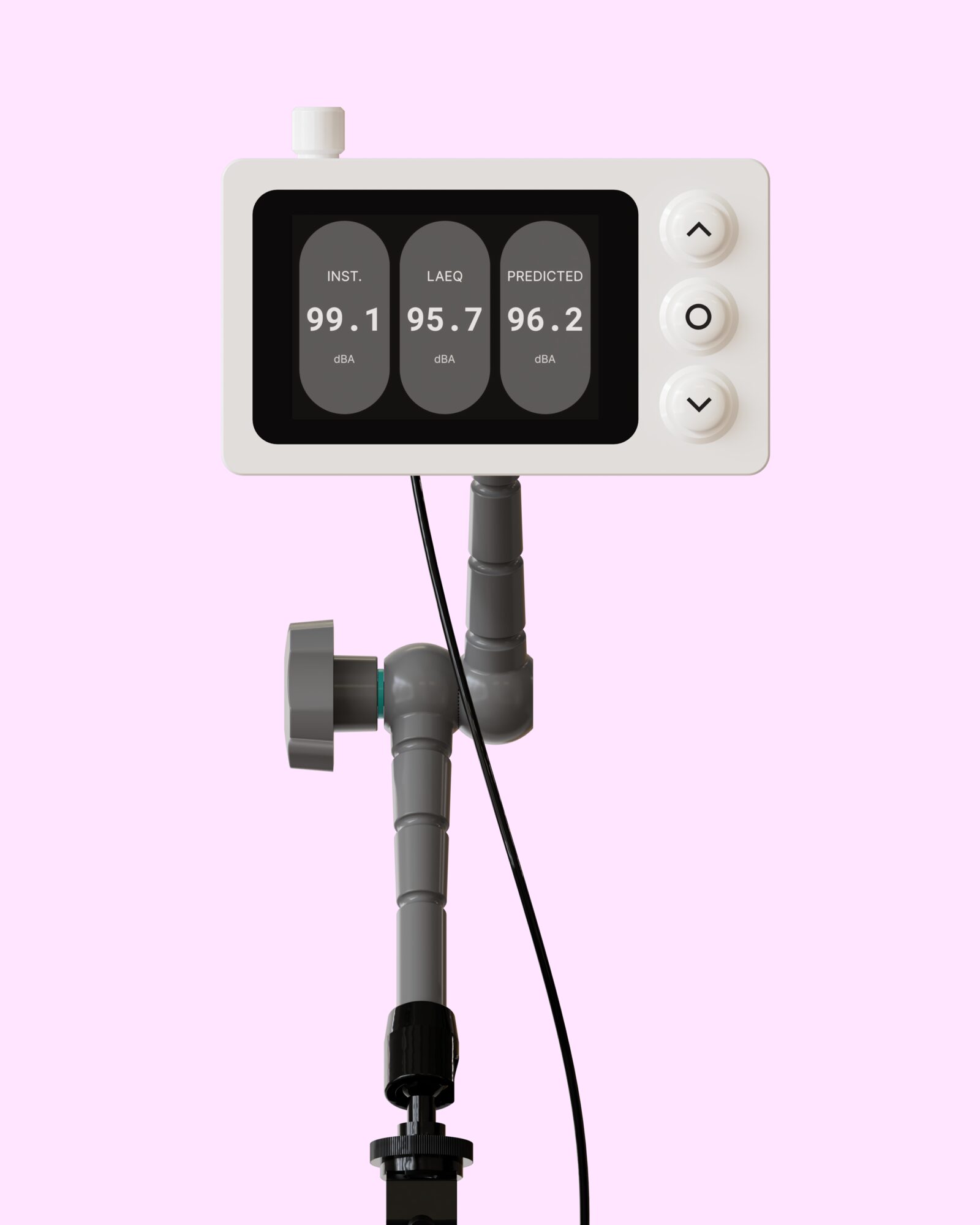
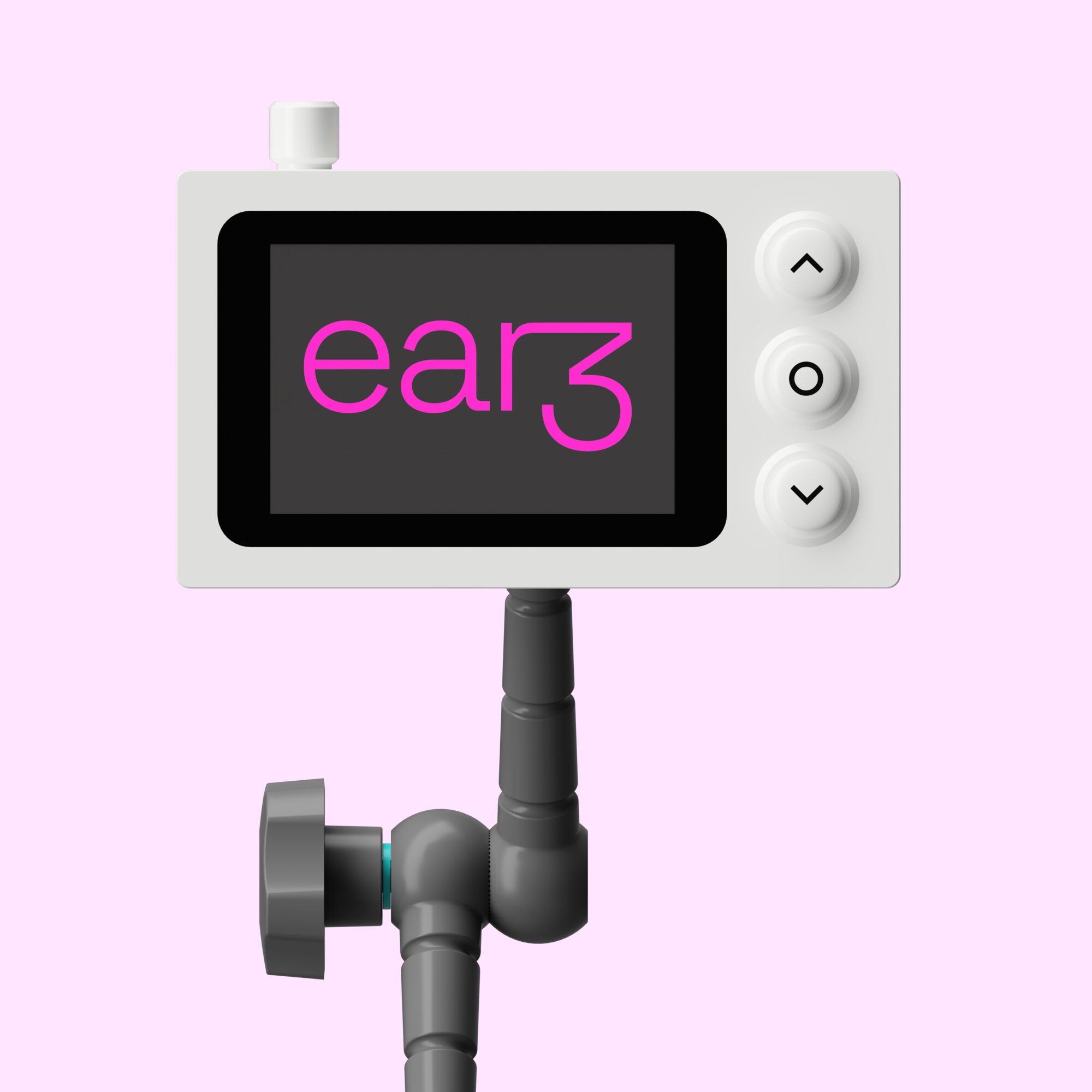
I built simple models to compare a rotary encoder, buttons and a rocker switch. A mounted device can't be held or leaned on, and a small human factors study showed buttons were easier to use than a knob or switch with your hand around the device. The final design has three buttons, up, down and select, which can navigate any screen.
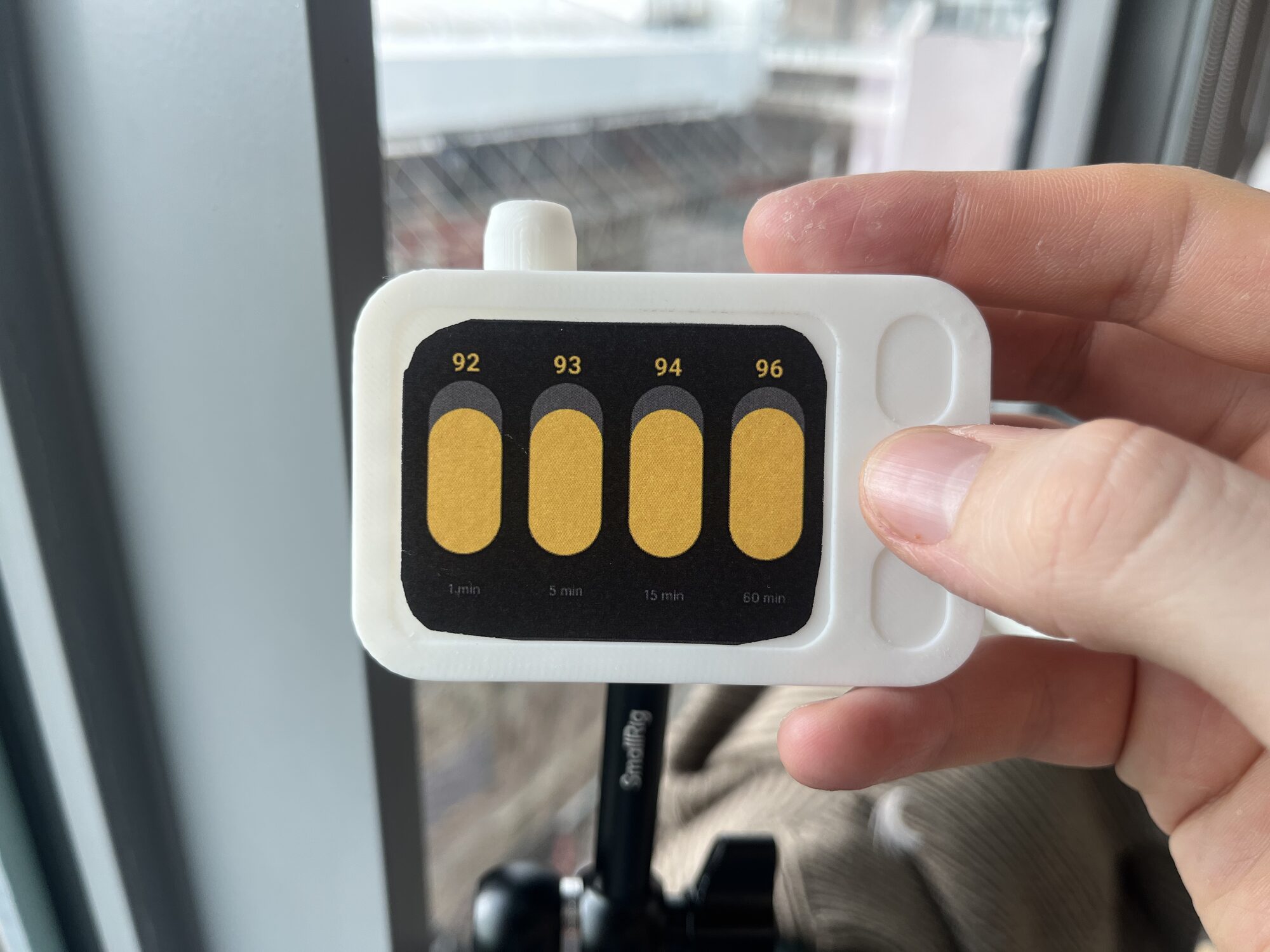
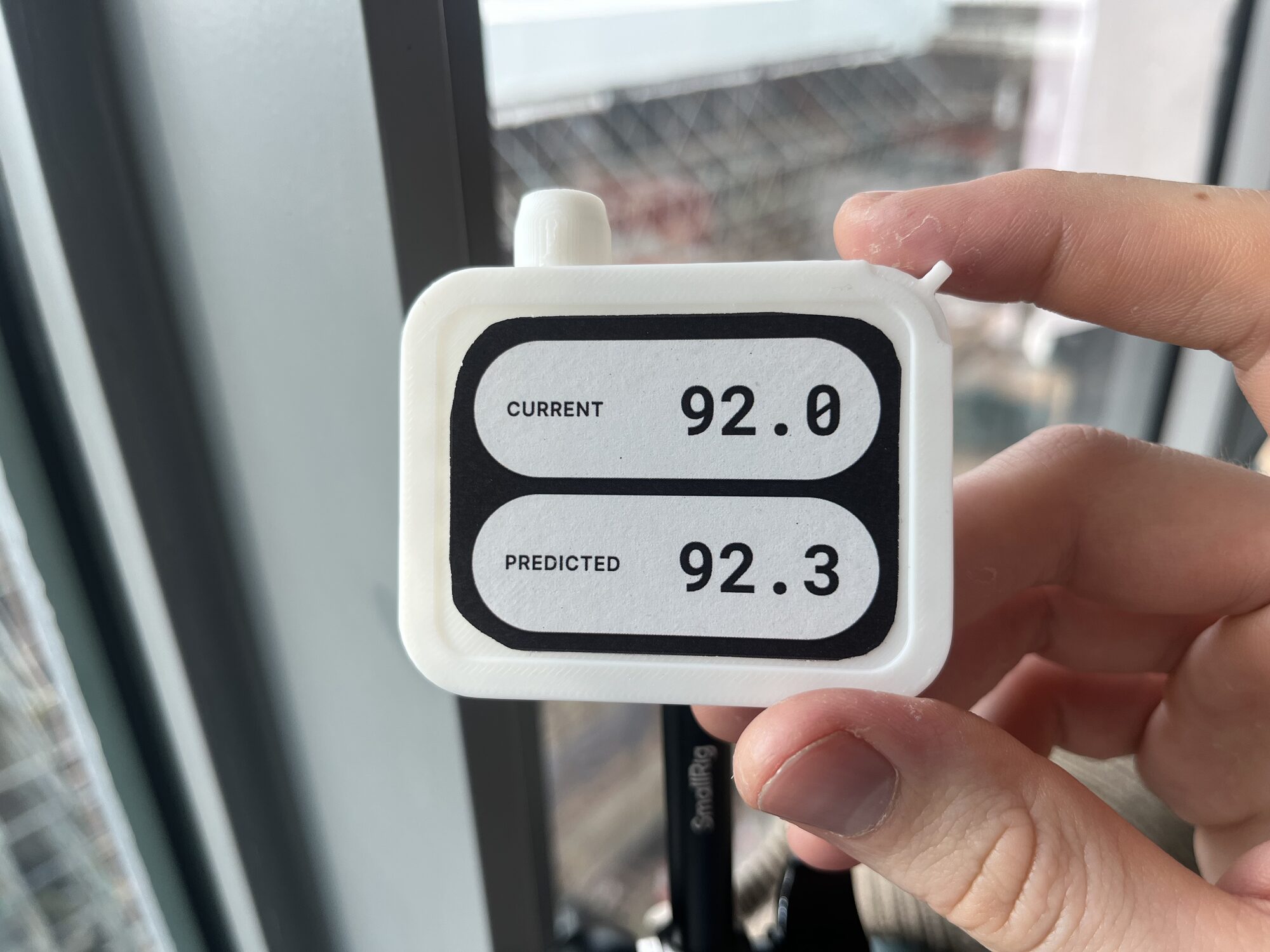
An interface you only glance at
Watching an engineer at work showed they only get a couple of seconds to look at the device. My first interface used eye-catching traffic light colours. After feedback from Andy Horsburgh, who explained that LAeq is a measure of overall system health rather than something to react to moment by moment, I redesigned it in muted greys, keeping colour for critical alerts only.
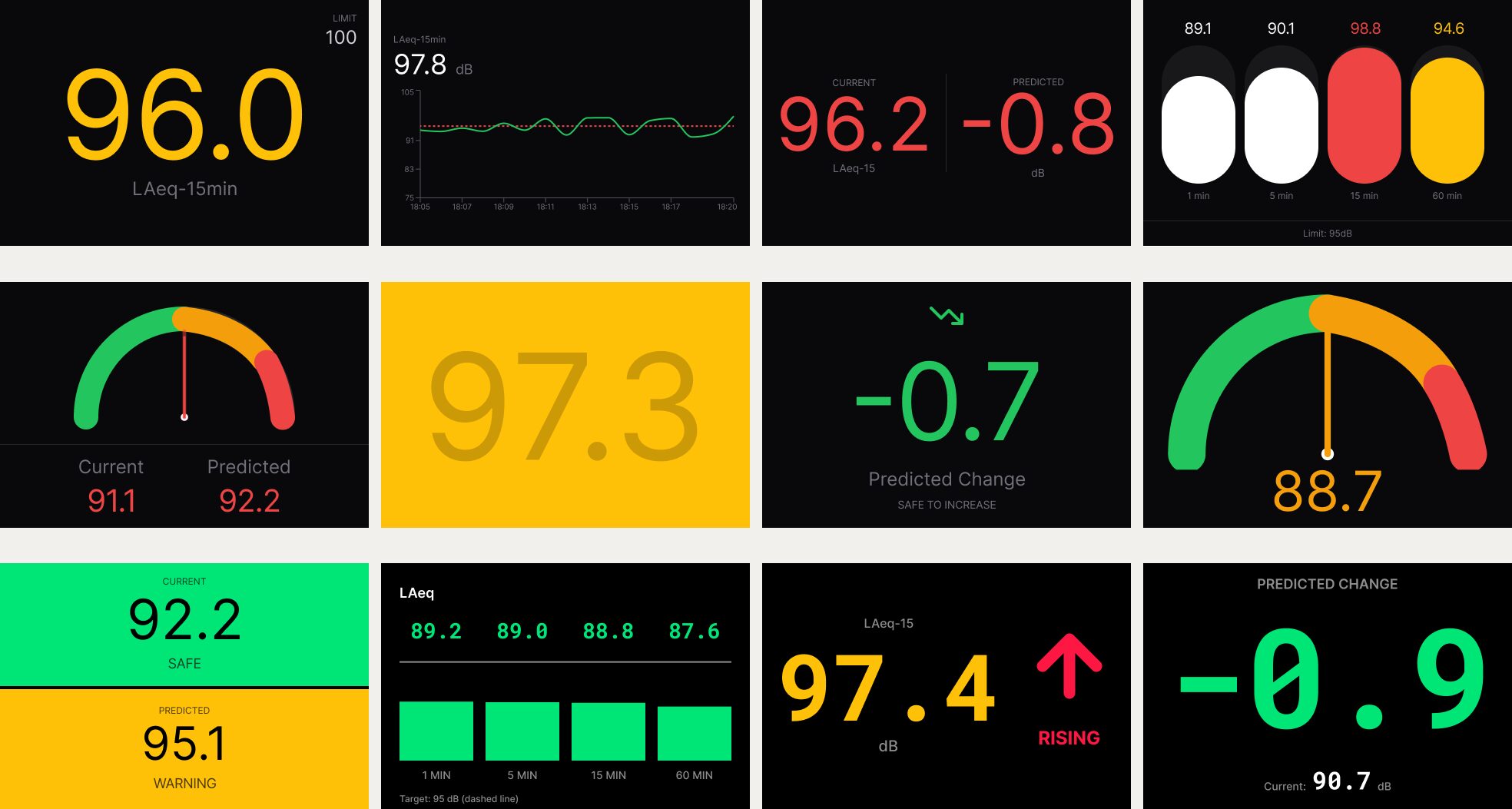
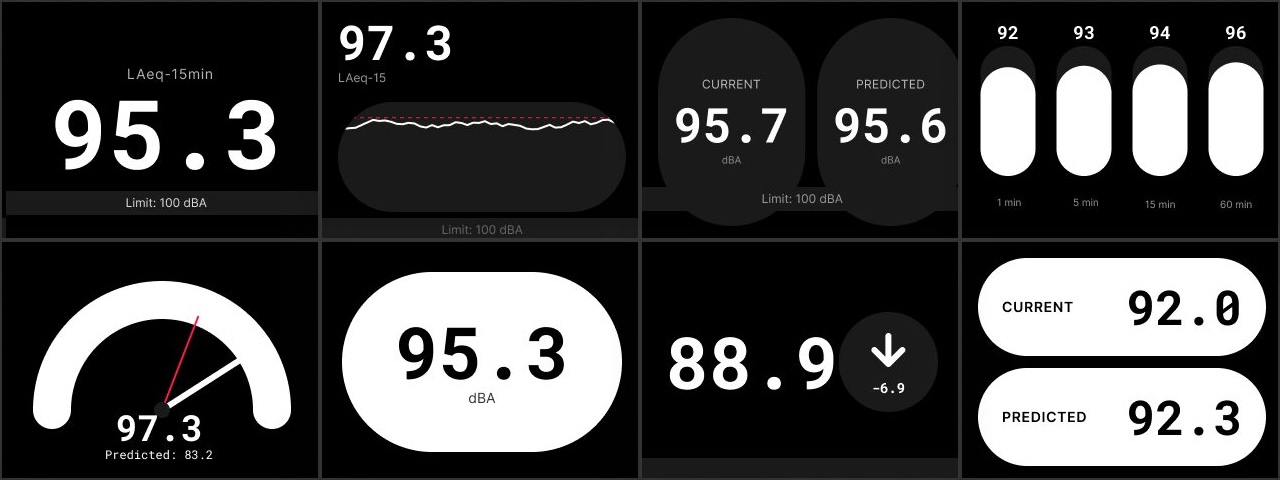
A microphone that can be calibrated
Jonathan Digby pointed out that the meter must be calibrated to be accurate and to meet regional rules. In my early prototypes the microphone sat inside the case behind a small hole, where a calibrator couldn't reach it, and off-the-shelf boards were too big to fit one.
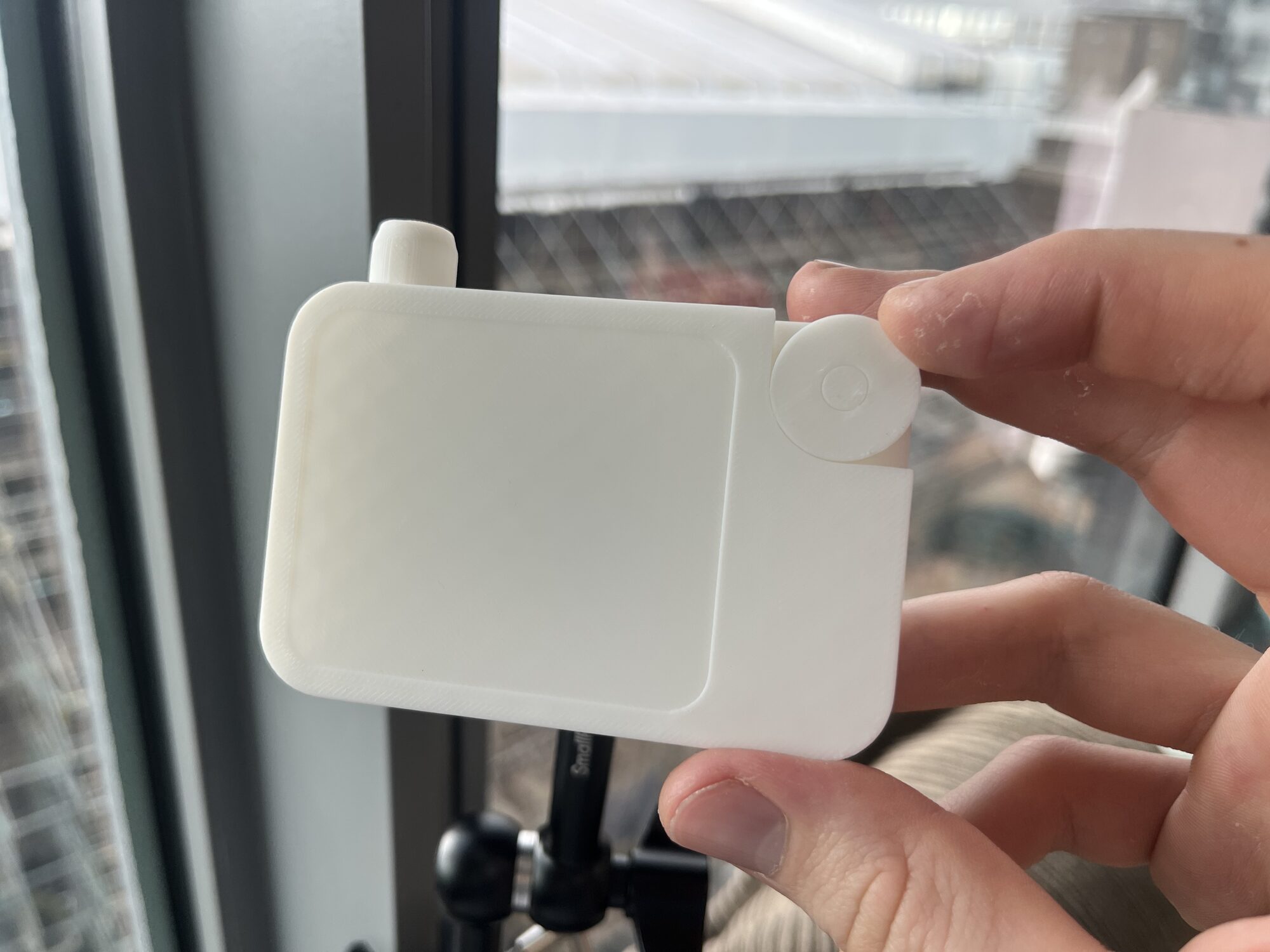
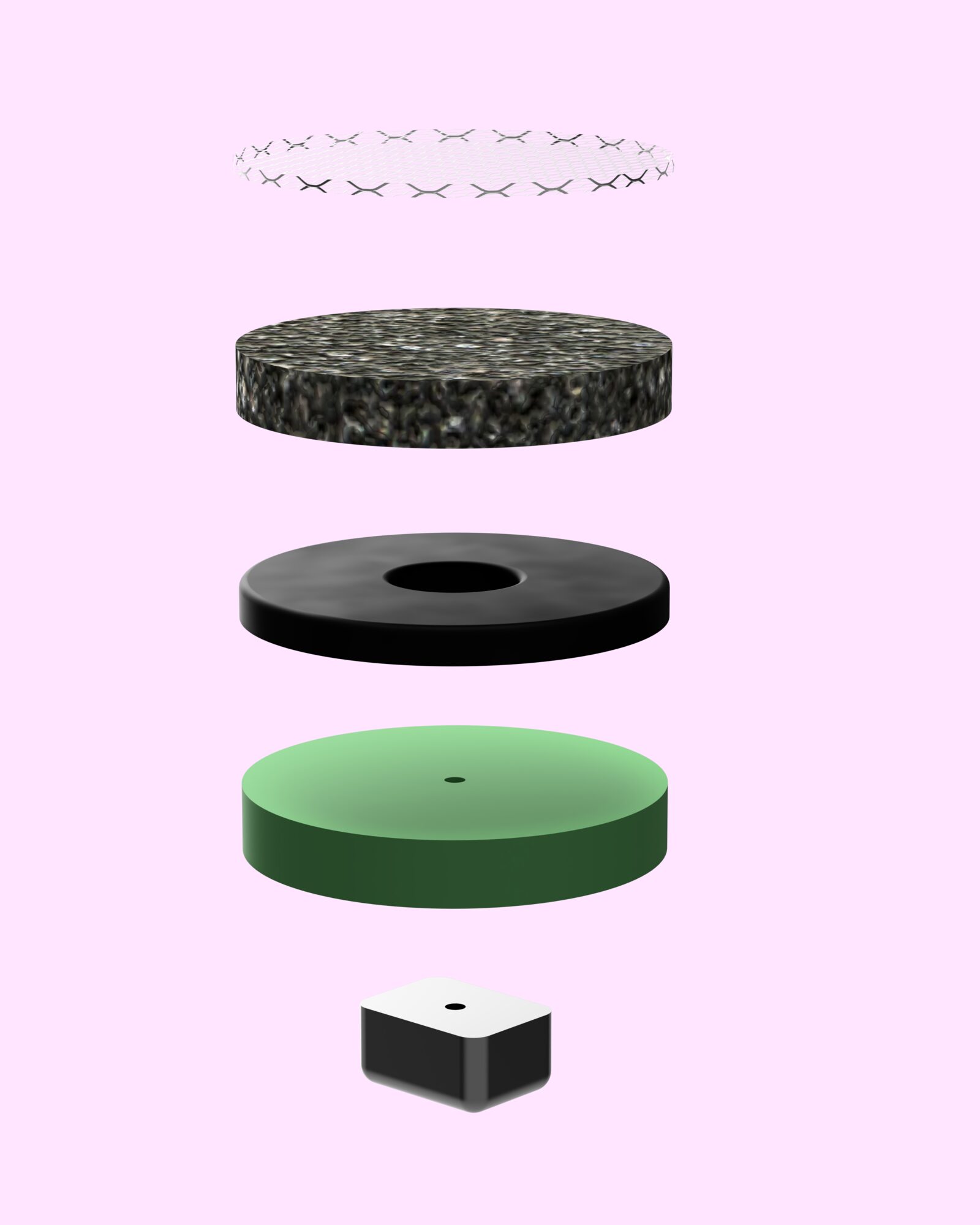
The answer was a separate 1/2" (12.7 mm) microphone capsule on top of the device, built around an ICS-43434 MEMS microphone and a custom PCB supplied by an industry collaborator. A wire mesh keeps out dust and droplets, a foam pad stops it rattling, and a rubber washer seals a small air chamber in front of the sensor that steadies the frequency response. Moving the microphone off the main body also isolates it from vibration.
Electronics and firmware
The device runs on a Raspberry Pi Pico W. I wrote the firmware in C++, with signal processing that measures sound level, calculates LAeq and predicts where it is heading, so users are warned before a limit is breached rather than after. Every session is logged to a micro SD card.
Testing
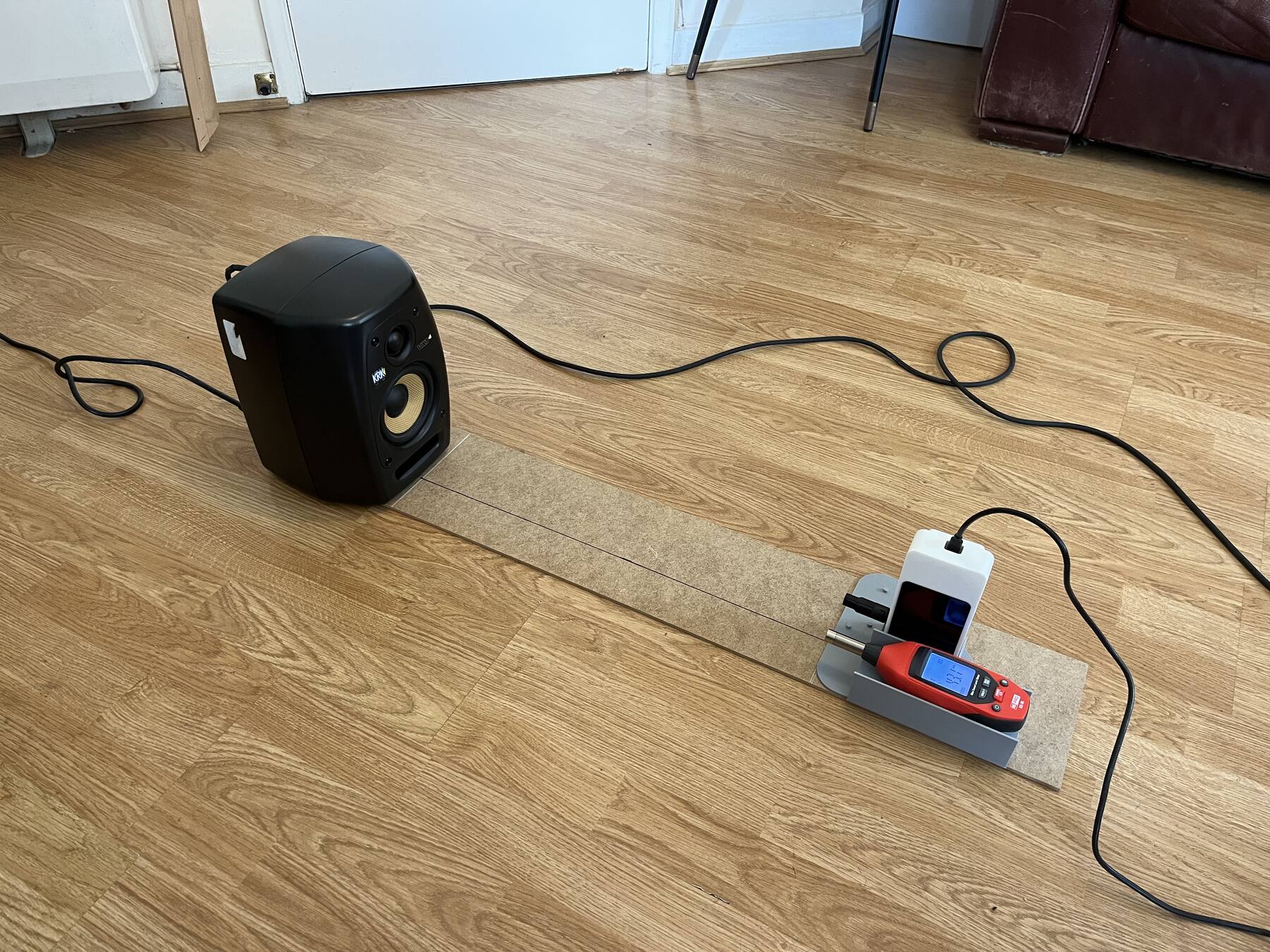
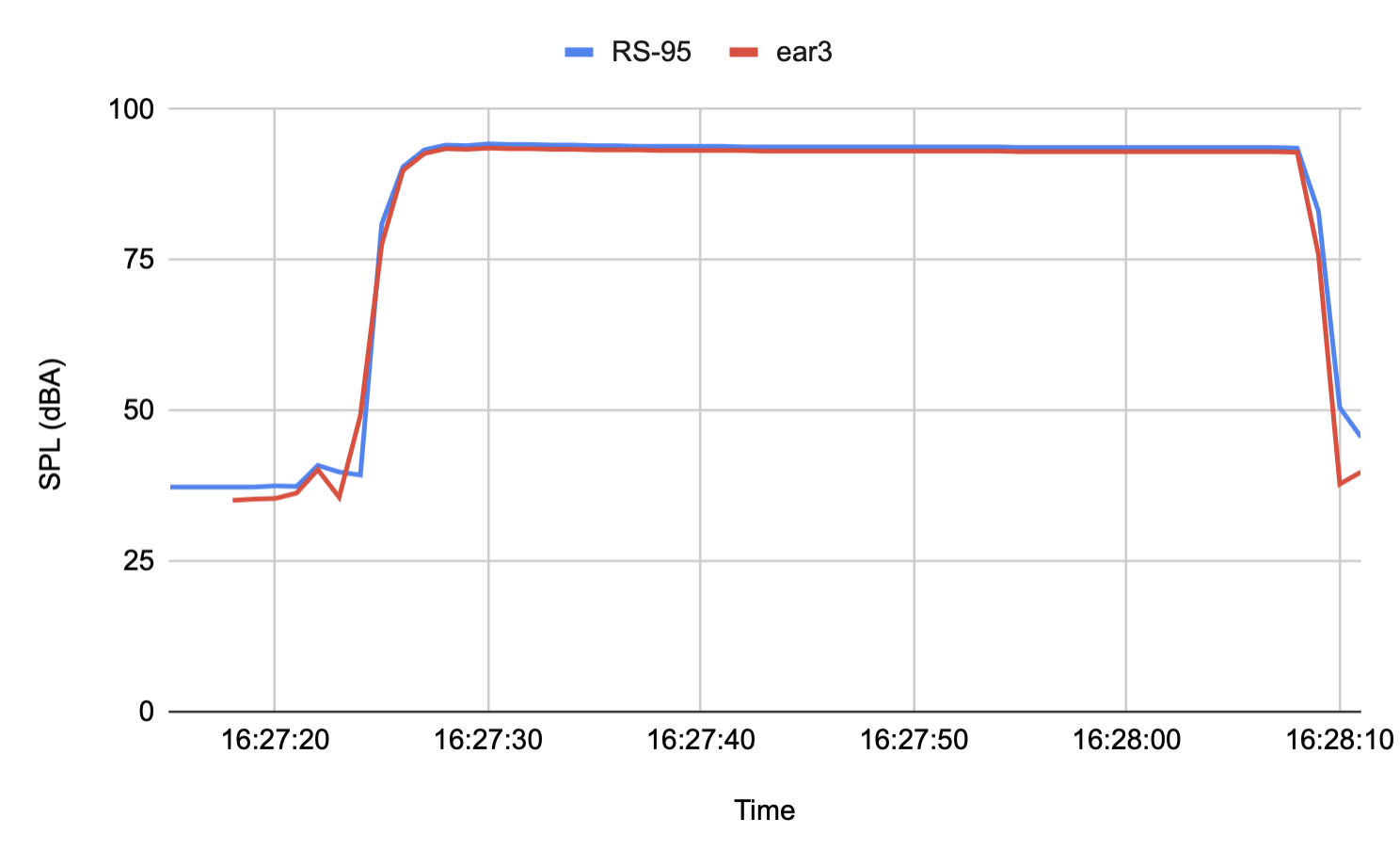
I tested ear3 against an RS-95 sound level meter, with both the same distance from a studio monitor. Below is the setup, followed by a plot of what each one recorded.
Designed for manufacture
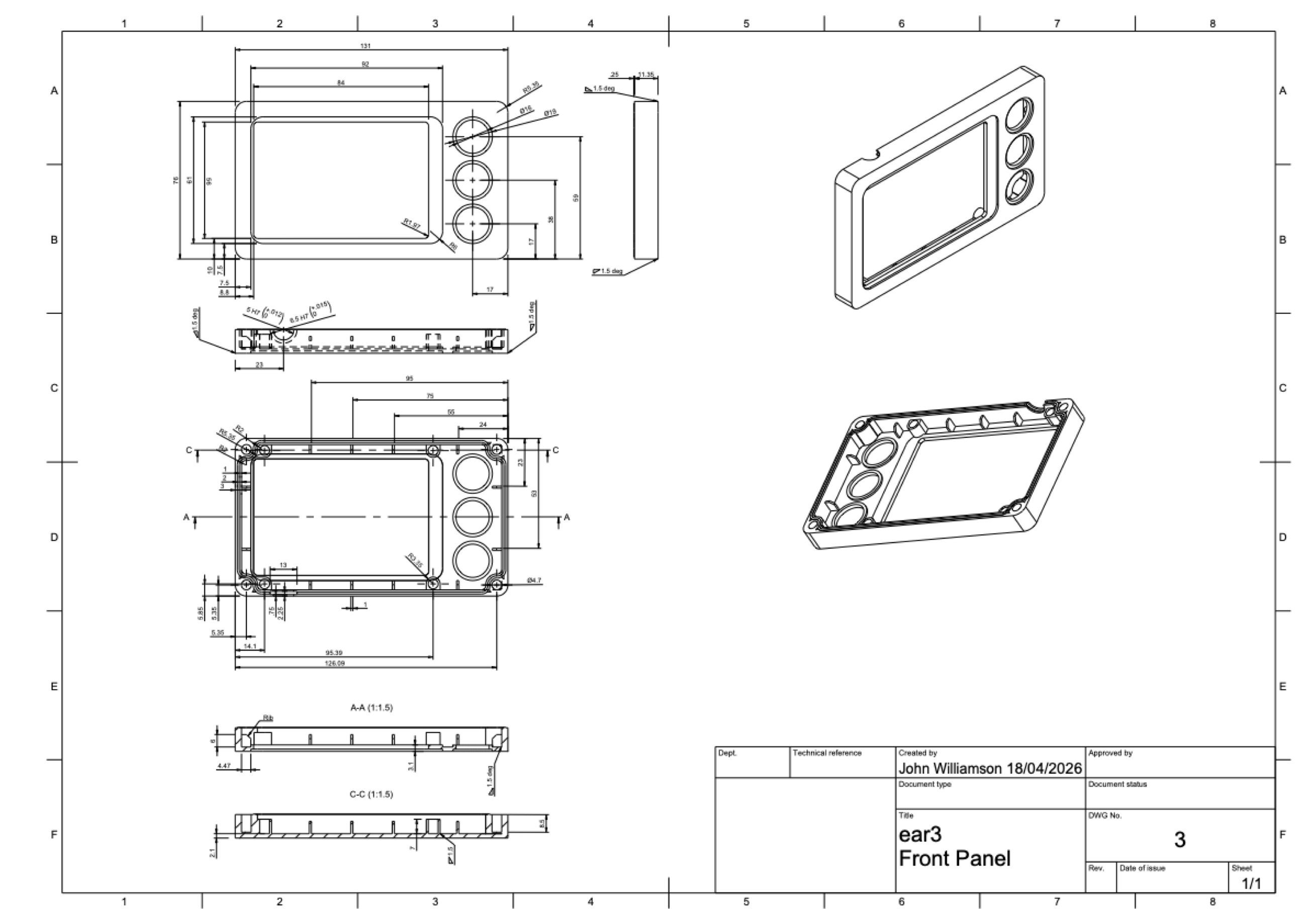
The enclosure is designed for injection moulding in recycled ABS, chosen for its strength, impact resistance and a good finish straight from the mould.
- 1.5° draft angles for clean release
- 2 mm nominal walls, with solid corners cored out to avoid sink marks
- A 4 by 2 grid of 1 mm internal ribs for stiffness
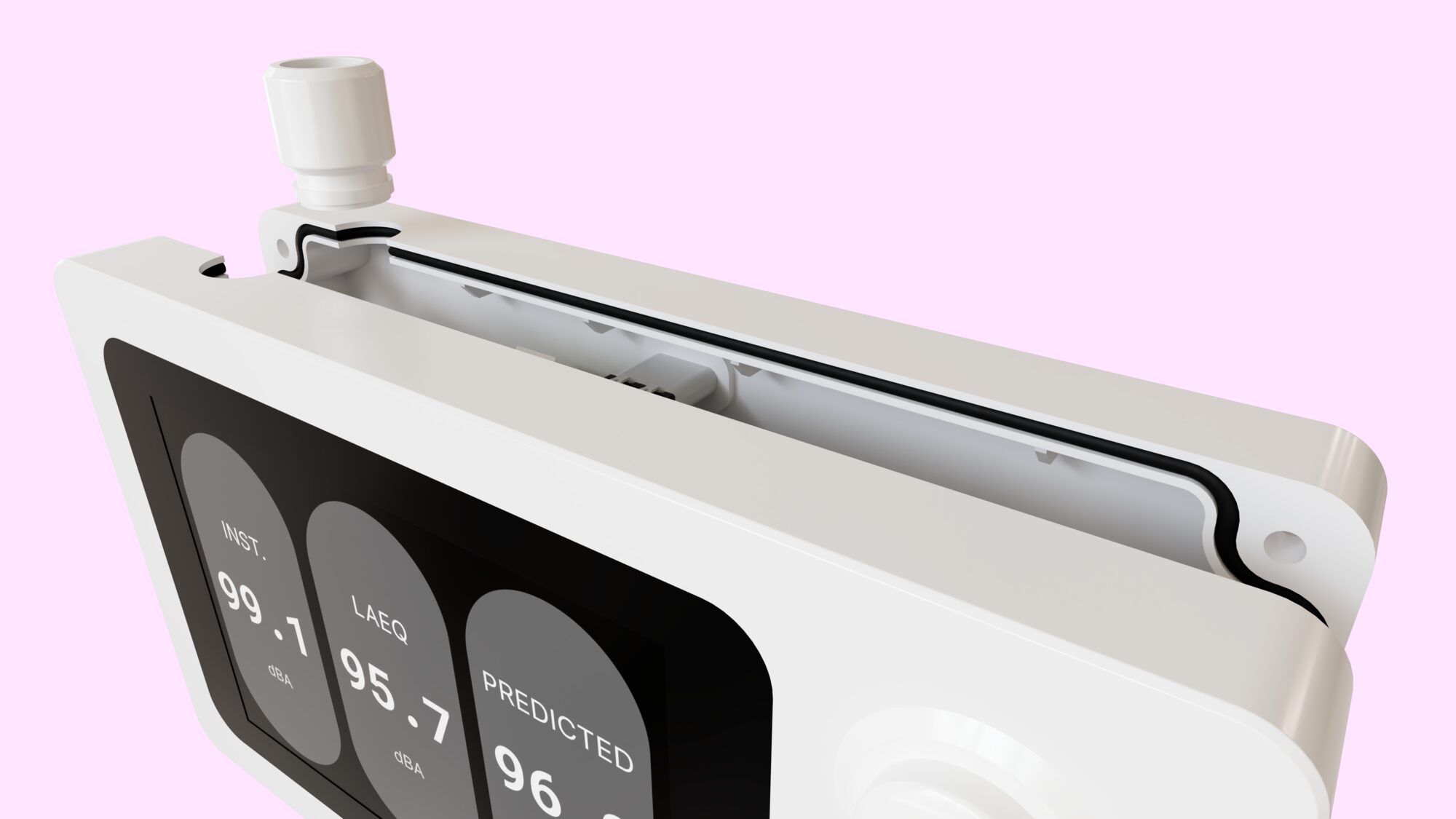
- A nitrile O-ring cord gasket, with every fixing outside the seal line
I targeted IPX4, and the enclosure passed a 30 minute submersion test with no leaks. It assembles with M2.5 screws and a single tool, and the microphone capsule can be replaced on its own, so the device can be repaired rather than thrown away.
Recognition
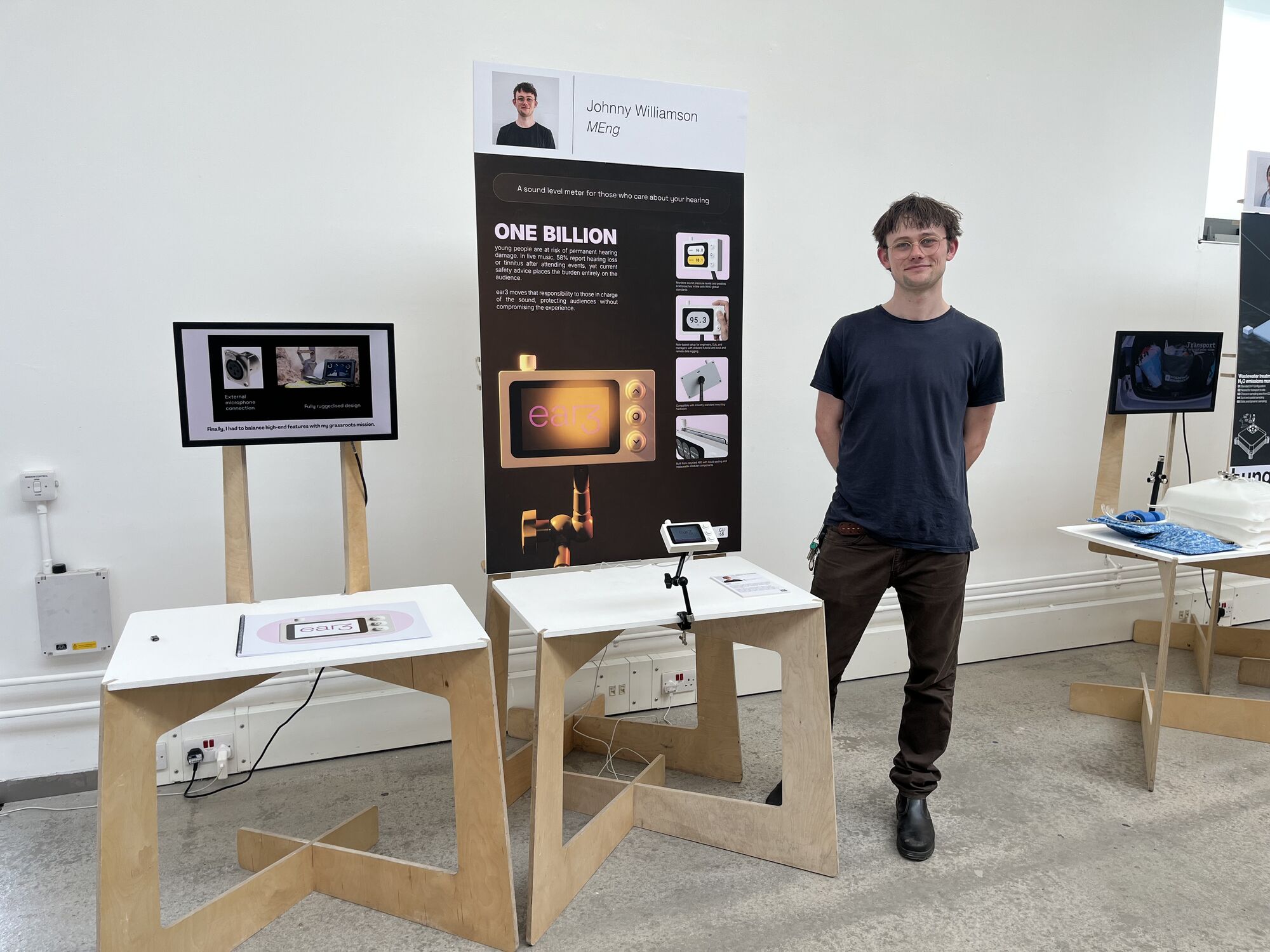
ear3 was exhibited at the 2026 degree show and received the RS Student Fund and the GU68 Trust Award.
"I know the WHO are desperate for a low cost device like this." Adam Hill, co-founder of HELA
"With Johnny's idea there is a clear reduction of technical knowledge... presented in a much more friendly manner. I hope the product becomes a real disrupter in the SLM space." Andy Horsburgh, sound engineer
Ready for real venues
ear3 isn't a concept that shows this could be done. It is a working, calibrated device, and I mounted it in the DJ booth of a Glasgow venue and ran it through a live set.
The trial pointed to refinements, a slimmer body and easier setup in the dark, but the core job was already done: measuring the room and warning before limits are reached. Venue staff told me they wanted its data logging so they could review and verify their sound levels.
With a bill of materials of £56.79, against thousands for professional meters, ear3 could start protecting audiences in grassroots venues now.